Introduction
The Cold War is considered to have begun when the United States and the Soviet Union began to compete against each other openly between 1945 and 1947. There’s no one single action or antagonist that can be blamed for that downfall. The war began as a result of a split in a coalition largely bound together by a common enemy, and from fears of security, differences in ideology and economic systems, and from a series of decisions by leaders whose trust in each other’s reliability was minimal. Recent scholarship emphasizes that these pressures created a probable, but not unavoidable, situation for confrontation.
A Fragile Wartime Alliance
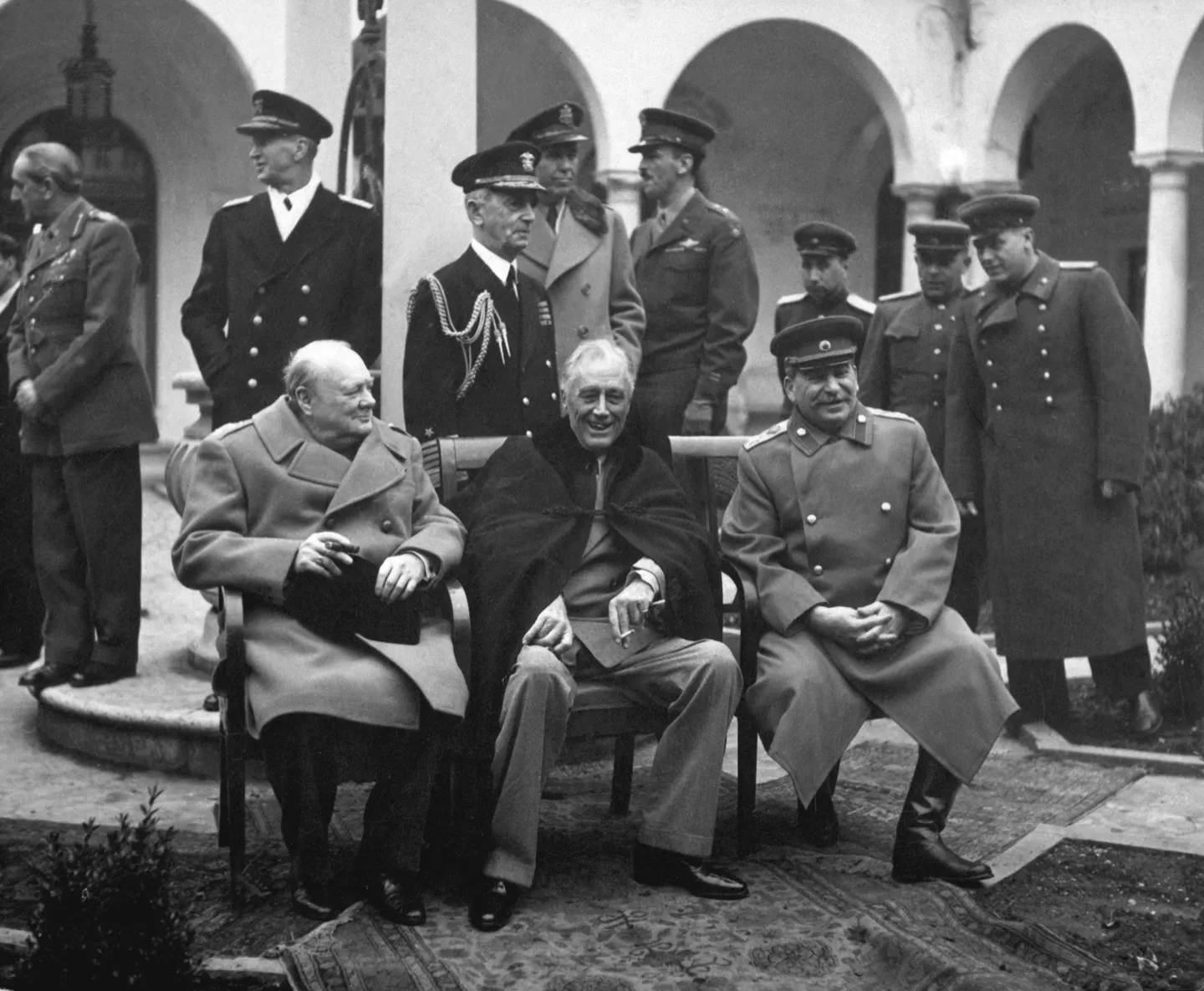
The United States, Britain, and the Soviet Union united against Nazi Germany because they were all threatened by it, but not because they envisioned a postwar world together. With Germany’s defeat secured, the principal aim of the alliance was lost and the disagreements became apparent. These involved the nature of Poland’s future, how the defeated Germany would be dealt with, the extent of reparations, and the influence that each power could have in liberated territory. At the Yalta and Potsdam conferences, compromises were agreed and each side interpreted the ambiguous wording in its own way. Change of leadership added to the pressure. Harry Truman, who became president in April 1945, had little experience of Stalin and was inclined toward a firmer line than Roosevelt’s. Each side interpreted the other’s actions through the worst available assumptions.
Soviet Security and the Eastern European Sphere
Soviet leaders had seen Germany invade Russia twice in a generation and emerged from the war determined to keep a buffer of friendly states on their western frontier. Xiaozhong Zhu’s review of Western scholarship identifies several wartime foundations for this policy. Eastern Europe was to guard against a revival of German militarism and future invasion. The Red Army’s presence gave Moscow the means to enforce its preferences. Communist leaders who had lived in Soviet exile were ready to take power. Western concessions at Tehran and Yalta also strengthened Stalin’s expectation of a secure sphere of influence.1 Zhu adds that this logic required firmly pro-Soviet governments but not necessarily communist ones in the short term.2
Historians still disagree about how deliberate Soviet policy was. Zhu reports that the debate centers on whether Stalin meant to transplant the Soviet model from the start or responded to Western pressure and local conditions. Zhu himself finds no conclusive evidence that Stalin orchestrated the process from the beginning.3 What is clear is that Moscow could enforce its preferences. It oversaw Eastern Europe through its military presence, intelligence services, and party organizations, and it relied on local communists who had spent years in Soviet exile.
Soviet pressure beyond Eastern Europe confirmed Western fears. Onur İşçi’s study of Turkey in 1945–46 shows how Soviet military and territorial demands, including claims related to the Turkish Straits, convinced Ankara that it needed Western backing. Molotov told Turkish representatives that Soviet security could not depend on Turkish goodwill, which dismissed Turkey’s own security concerns.4 Soviet defensive logic and Western alarm thus fed each other, a pattern now called the security dilemma.
Ideology and Competing Economic Orders
Ideology gave these security fears a deeper meaning. Marxism-Leninism held that capitalism produced conflict and would eventually be superseded, while American leaders believed that open markets, democratic institutions, and international trade were the foundations of lasting peace. Each side therefore saw the other’s system as a threat to its own long-term security, not merely as a rival power. Zhu shows that Soviet policy was not ideologically rigid at first. In the early postwar years Moscow encouraged a transitional “people’s democracy,” with coalition governments and mixed economies, and discouraged dogmatic talk of socialism.5 Ideology narrowed the room for compromise only gradually, as relations with the West deteriorated.
American Policy and the Hardening of Blocs
American decisions in 1947 turned suspicion into a structured confrontation. In March, the Truman Doctrine pledged support to governments resisting communist pressure, beginning with aid to Greece and Turkey. In June, Secretary of State George Marshall proposed large-scale economic assistance to rebuild Europe. David McCourt and Stephanie Mudge argue that the Marshall Plan was “anything but inevitable.” The Soviet threat, elite agreement that aid was economically necessary, and a liberal internationalist outlook had to be assembled into a workable political consensus before the plan could pass.6 American containment was therefore partly the product of domestic politics and political entrepreneurship, not simply a natural reaction to Soviet behavior.
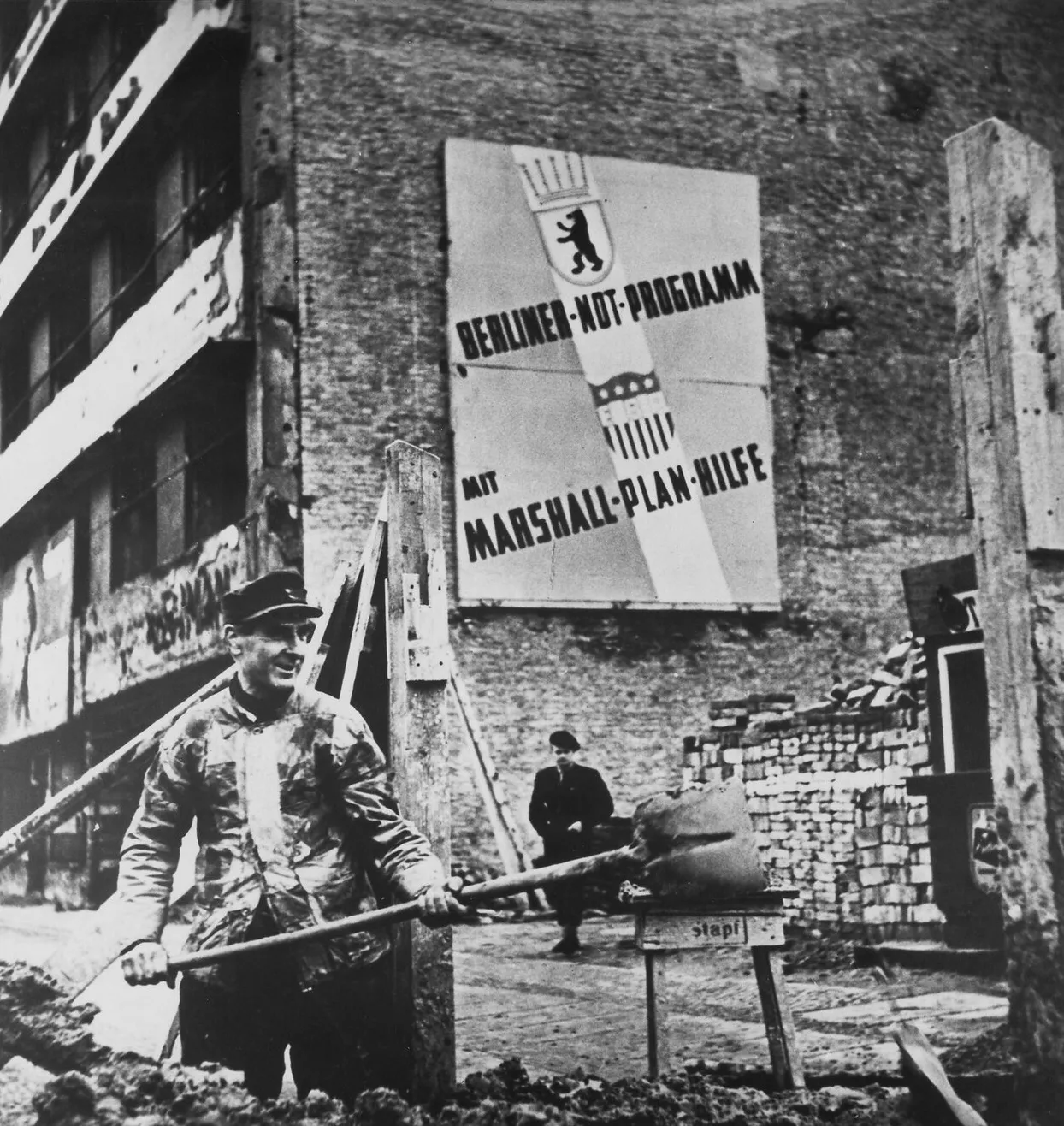
The Marshall Plan also hardened the division it was meant to prevent. According to Zhu, the plan initially included the Soviet Union and Eastern Europe, but Moscow judged it anti-Soviet, rejected it, and barred its Eastern European neighbors from taking part. It countered with the Molotov Plan and, in September 1947, with the Cominform. At its founding Andrei Zhdanov declared the world divided into two camps and ended the flexibility of the earlier period.7 In this view, the Marshall Plan and the Yugoslav–Soviet conflict led Stalin to abandon the transitional “people’s democracy” and speed Eastern Europe’s Sovietization. Europe now had two rival blocs, each defined partly in opposition to the other.
February 4–11, 1945
Yalta Conference
Roosevelt, Churchill and Stalin meet in the Crimea. Their declaration on Poland provides for the inclusion of Communists in its postwar government, and France is to share in governing Germany.
In the essay A Fragile Wartime Alliance
July 17 – August 2, 1945
Potsdam Conference
Truman, Stalin and Churchill (replaced on July 26 by Clement Attlee) meet in Germany. Reparations are limited to each occupying power’s own zone, and Poland receives German territory.
In the essay A Fragile Wartime Alliance
March 1945 – 1946
Soviet demands on Turkey
Moscow ends its 1925 friendship treaty with Turkey and presses for naval bases on the Straits and for border changes in eastern Anatolia; Turkey moves closer to the United States.
In the essay Soviet Security and the Eastern European Sphere
March 12, 1947
Truman Doctrine
Truman asks Congress for $400 million in aid to Greece and Turkey and pledges support to free peoples resisting attempted subjugation.
In the essay American Policy and the Hardening of Blocs
June 5, 1947
Marshall’s Harvard speech
Secretary of State George Marshall proposes American help for Europe’s recovery. Soviet and Eastern European participation is at first a possibility; Congress passes the Economic Cooperation Act in March 1948.
In the essay American Policy and the Hardening of Blocs
September 1947
Cominform founded
Moscow sets up a bureau linking the communist parties. Andrei Zhdanov declares the world divided into two camps, capitalism and socialism.
In the essay American Policy and the Hardening of Blocs
Dates and facts come from the sources below, not from the essay’s own notes.
Sources: U.S. Department of State, Office of the Historian, Milestones: Yalta Conference, Potsdam Conference, Truman Doctrine and Marshall Plan; Onur İşçi, “Turkey at a Crossroads,” Diplomatic History 47, no. 4 (2023); Xiaozhong Zhu, “Western Studies on the Sovietization of Eastern Europe,” Chinese Journal of Slavic Studies 3, no. 1 (2023).
Contingency and Historiography
Historians have long argued about responsibility. Early “orthodox” accounts blamed Soviet expansionism, “revisionist” accounts stressed American economic power, and later work emphasized mutual misperception. Current scholarship is more attentive to contingency. Zhu shows that Western scholars remain divided between Vojtech Mastny, who stresses Stalin’s insecurity, and Vladislav Zubok, who stresses a traditional revolutionary-imperial drive to control Eastern Europe. Zhu himself concludes that Stalin adjusted his policy to changes in U.S. policy and the international situation, so that Sovietization was partly a product of the wartime alliance’s collapse.8 McCourt and Mudge’s account of the Marshall Plan points the same way: even the Western response had to be deliberately built.9
Conclusion
The Cold War arose from the interaction of several causes: the disappearance of a common enemy, Soviet and American security fears, rival ideologies and economic systems, and a sequence of policy choices in 1945–47 that hardened suspicion into rival blocs. Recent scholarship emphasizes that each factor was shaped by human decisions made with imperfect information. Understanding the Cold War as a contingent outcome, not a predetermined clash, is the main contribution of the newer literature.