Question One: The Pennsylvania and Auburn Systems
The Pennsylvania and Auburn prison styles both rested on the belief that criminal conduct is learned from other criminals and reinforced by contact with them. The Pennsylvania, or separate, system was a penal technique built on solitary confinement. It was promoted by the Philadelphia Society for Alleviating the Miseries of Public Prisons, founded in 1787, and it fostered the principle of penitence and supported reformation. The system was first tried at the Walnut Street Jail in Philadelphia, where a 1790 law added a block of solitary cells (Rubin, 2018). Its model was Eastern State Penitentiary, which admitted its first prisoner in 1829 and held every inmate in solitary confinement with labor: each prisoner lived and worked alone in a cell (Eastern State Penitentiary Historic Site, n.d.).
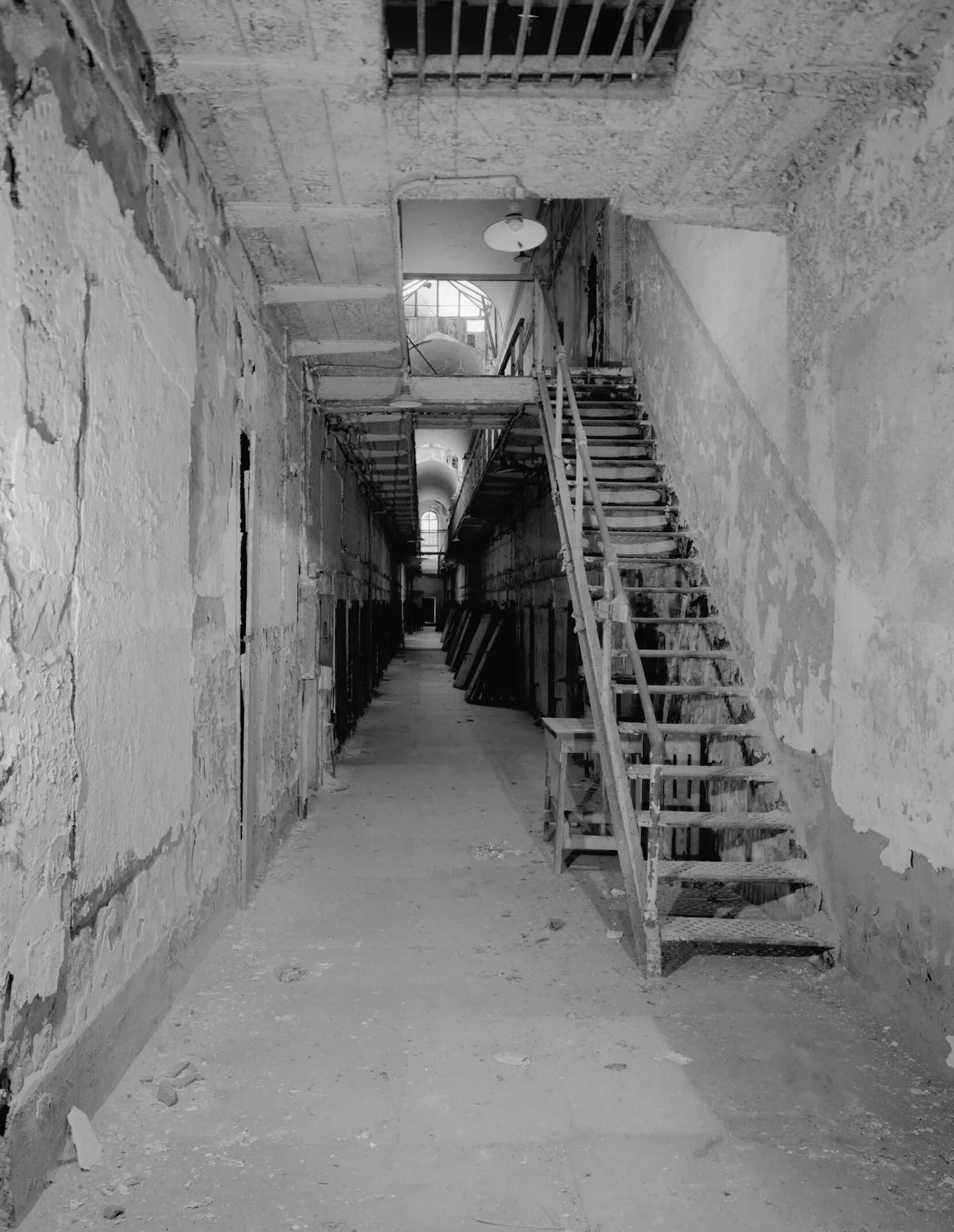
The Auburn system, named after the state prison at Auburn, New York, was known as the congregate or silent system. In the form it took in the 1820s, inmates worked together in silence in prison workshops by day and were locked in solitary cells at night (Rubin, 2018). The two prison styles have different advantages and disadvantages. Inmates in the Pennsylvania system also worked, but alone in their cells, so they were spared the hard, regimented labor of the Auburn workshops. The Auburn system was cheap to introduce in many states and countries. It provided a good opportunity for vocational training and increased production for the state’s revenue (Rubin, 2018). The Pennsylvania system was expensive to establish, since every inmate needed a cell large enough to live and work in. The Auburn system offered a factory-style setting that permitted mass production through economies of scale, which made it more cost-effective than the Pennsylvania system.
Pennsylvania (separate) system
Inmates lived, worked and slept alone in their cells, with no contact with other prisoners, so that solitude would lead to penitence. First tried at the Walnut Street Jail (1790), modeled at Eastern State Penitentiary (1829). Costly to build, since every inmate needed a large cell.
Auburn (congregate or silent) system
Inmates worked together in silence in workshops by day and slept in solitary cells at night. Named after the New York state prison at Auburn (1820s). Cheaper to build and run, and the factory-style labor brought in revenue for the state.
Diagram by Writers Per Hour, summarising the paper above. Its sources are the paper’s own: Rubin (2018) and the Eastern State Penitentiary Historic Site, History of Eastern State.
If the two systems were to be introduced today, the Auburn system would be more effective than the Pennsylvania style. In my view, it would generate more income for the state and give inmates vocational training, which would be important in their lives after the sentence (Rubin, 2018). However, the system would face significant legal pressure. For instance, its rule of total silence and its long hours in solitary cells could be challenged as violations of inmates’ rights, since they deny inmates socialization.
Question Two: Surety Bail Bonds
In my view, the surety bond is the most practical form of bail for most defendants. It involves buying a bond from a bail bond company, which charges a non-refundable premium, usually about 10% of the bail amount, and typically requires collateral worth the full bond, such as valuable personal property, a vehicle, or a title deed (Sawyer, 2022). For example, if the court sets bail at $10,000, a defendant can buy a bail bond by paying $1,000 and putting up collateral valued at $10,000. If the defendant does not appear in court, the bond company owes the court the full bail amount (Sawyer, 2022). Surety bail can also help manage jail overcrowding. To manage their jail populations, states need a responsible and proven release mechanism that reliably secures a defendant’s appearance in court.
The premium
The defendant or the family pays the bail bond company a premium of about 10%, here $1,000. It is never returned, even if the defendant attends every hearing.
The collateral
The company usually also takes collateral worth the full bond, here $10,000, such as property, a vehicle or a title deed. The defendant is released, and the company promises the court the full $10,000.
The court date
If the defendant appears, the case goes on, the bond ends and the collateral is returned. If the defendant does not appear, the company owes the court $10,000 and can recover it from the collateral.
Diagram by Writers Per Hour, summarising the paper above. The figures are the paper’s own example; the steps follow Wendy Sawyer, All Profit, No Risk: How the Bail Industry Exploits the Legal System (Prison Policy Initiative, 2022).
Surety bonds also matter to lower- and middle-class defendants, since they let families who cannot afford the full bail secure release for a small share of the total. Defendants often choose a surety bond because bail is commonly set at an amount that exceeds the average household’s budget, and because they cannot pay it themselves, they turn to a bail bond company (Sawyer, 2022). The system has critics, however. The premium is never returned, even when the defendant attends every hearing, and families risk losing the property they pledged as collateral (Sawyer, 2022). For these reasons, some states have moved away from money bail. Illinois ended cash bail entirely when its Pretrial Fairness Act took effect on September 18, 2023, after the state supreme court upheld the law (Nowicki, 2023).
Question Three: Probation for Drug Possession
Research comparing states’ rates of drug imprisonment with their drug problems shows that the expansion of imprisonment has not helped solve the nation’s drug problem (The Pew Charitable Trusts, 2018). This leaves room for alternative methods, such as probation for drug possession. I think this method would help reduce drug possession problems in the country.
A National Research Council report found that mandatory minimum sentences for drug and other offenders have little or no deterrent effect (The Pew Charitable Trusts, 2018). The finding rests on decades of observation showing that when street-level drug sellers are arrested and imprisoned, others quickly take their place. The same research also found that shorter prison terms for certain federal drug offenders did not lead to higher recidivism rates.
For instance, in 2007, the U.S. Sentencing Commission retroactively reduced the sentences of many crack cocaine offenders. A five-year follow-up found no evidence that offenders whose sentences were reduced reoffended more often than those who had served their full terms (U.S. Sentencing Commission, 2014). These and other findings show that the most effective response to drug abuse and possession combines policing that limits trafficking and stops new markets from forming, alternative sentences that keep nonviolent drug offenders out of costly prisons, treatment that reduces dependence and relapse, and prevention that reaches the people most at risk of substance use disorder (The Pew Charitable Trusts, 2018). In 2010, for example, South Carolina expanded probation and parole opportunities for people convicted of drug offenses. Since the law was passed, the state’s prison population has fallen by 14%, and people convicted of violent offenses now make up a larger share of those in prison (The Pew Charitable Trusts, 2018). The state’s violent crime rate also dropped by 16% between 2010 and 2015.
Question Four: Shock Probation and Split Sentencing
Shock probation has been used in the United States for about six decades, since Ohio introduced it in the 1960s. Its primary aim is to “shock” offenders with a taste of the consequences of their conduct. Instead of simply sentencing an offender to probation, the court orders a short stay in prison first and then releases the offender to probation. The idea is that being taken away from family and spending time in prison is a shock to the offender. Such a shock is a warning that helps deter offenders from committing crimes again and helps them realize the consequences of their actions. Shock probation is not the best technique for punishing all offenders. It is best reserved for cases where there is a significant chance that the offender can be rehabilitated: young and juvenile offenders, first-time offenders, and people convicted of minor crimes such as drug offenses and theft.
Split sentencing is a related practice in which an offender serves a shortened term in prison or jail and then the rest of the sentence on probation or another form of community supervision (Lehmann, 2024). During their time outside prison, offenders may be required to meet a probation officer, complete drug or alcohol treatment, or perform community service. They may also be ordered to refrain from certain conduct, such as driving, drinking alcohol, or committing another crime. In cases linked to alcohol and drugs, the offender may be placed on electronic monitoring for the probation period. Split sentences are usually seen as suited to first-time and minor offenders, although a study of felony cases in Florida found that judges were more likely to give them to juveniles tried as adults than to adult defendants, even where the guidelines recommended prison (Lehmann, 2024).
Question Five: Private Prisons
The prison environment and culture matter to public health and safety. Although much of the policy debate and public attention focuses on private prisons, most prisoners are held under state authority: at the end of 2023, states had jurisdiction over about 1.1 million of the 1.25 million people in U.S. prisons (Mueller & Kluckow, 2025). This means that states are the key unit for understanding the wide effects of imprisonment and the place where solutions are most likely to be found. However, for many years, states have faced budget shortfalls in running their correctional facilities, and some have turned to private companies to hold part of their prison population. Although the U.S. imprisonment rate fell by a quarter between 2013 and 2023, the number of prisoners rose again in 2022 and 2023 (Mueller & Kluckow, 2025), so the issue of privatization will not go away soon.
Private involvement in American prisons is not new. In the 19th century, states leased prisoners and their labor to private contractors, and prisons were expected to make a profit whether the government or the private sector ran them. The modern for-profit prison industry grew out of the rapid expansion of prison populations that began in the 1980s, and by 2016, private prisons held 128,063 people, 8.5% of all state and federal prisoners (Gotsch & Basti, 2018). Supporters of private facilities argue that they provide better services at lower costs than state-owned prisons. For instance, private prisons mostly employ non-union workers, while state prisons mostly employ union workers, which saves on wages and benefits that are not set by collective bargaining (Gotsch & Basti, 2018). Others argue that private prisons add to local tax bases by paying property, income, and sales taxes. Critics answer that decades of research do not support the claimed cost savings (Gotsch & Basti, 2018). Federal policy has also changed course twice in recent years: an executive order of January 2021 directed the Department of Justice not to renew its contracts with private prisons, and it was revoked on January 20, 2025 (Eisen, 2025).
State and federal prisoners held in private prisons at yearend, thousands
- 2016: 128.1 thousands.
- 2023: 88.6 thousands.
Both figures come from the Bureau of Justice Statistics’ yearend counts; the 2016 one is as The Sentencing Project reports it. In 2023, about 75,000 of the people in private prisons were held for states and about 13,000 for the federal system.
Chart by Writers Per Hour. Sources: Gotsch and Basti, Capitalizing on Mass Incarceration (The Sentencing Project, 2018), for 2016; Mueller and Kluckow, Prisoners in 2023 – Statistical Tables (Bureau of Justice Statistics, 2025), table 14, for 2023.
Show every figure as a table
| Year | People in private prisons (thousands) | Exact count | Share of all prisoners (%) |
|---|---|---|---|
| 2016 | 128.1 | 128,063 | 8.5 |
| 2023 | 88.6 | 88,618 | 7.1 |
Question Six: Supermax Prisons
A supermax prison is a facility of the highest security level, built for the most dangerous and disruptive prisoners. The United States Penitentiary Administrative Maximum Facility (ADX) in Florence, Colorado, is the most secure prison in the country. In November 2026, it held 403 people (Federal Bureau of Prisons, 2026), among the most dangerous and violent prisoners in the federal system. Prisoners there spend most of the day alone in their cells, with restricted contact with other prisoners and staff. Windows and recreation areas have restricted views to prevent escape attempts. When prisoners leave their cells, they are escorted by several officers and wear handcuffs, leg irons, and belly chains.
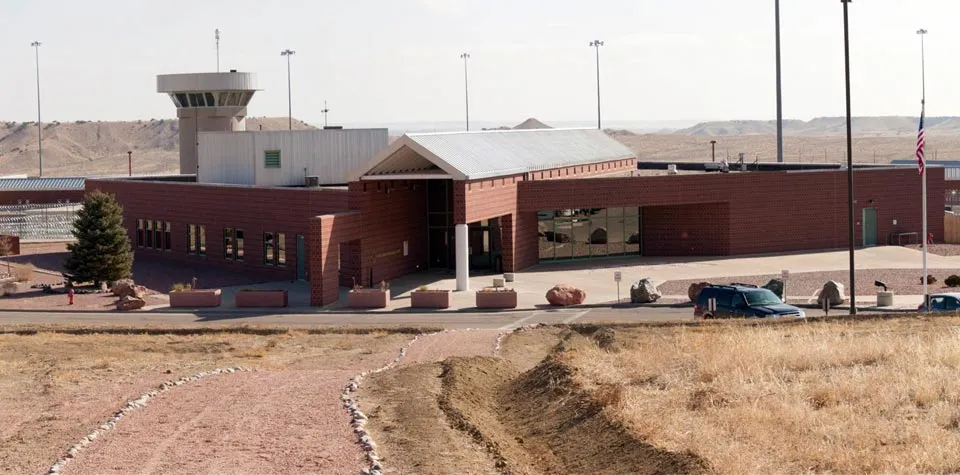
The main purpose of supermax prisons is to hold extremely dangerous and violent prisoners apart from the general population. Prison systems argue that this kind of restrictive housing is essential to institutional order and safety (Labrecque & Mears, 2019). The disadvantage of supermax prisons is cost: they are expensive to build and run, since they need many officers, more space, and costly security systems. Critics also argue that their conditions are inhumane and can cause mental and physical health problems among prisoners (Labrecque & Mears, 2019). Supermax prisons offer few rewards for good behavior and limited rehabilitation, although at ADX a prisoner who keeps clear conduct for a set period and takes part in programs can move to a less restrictive unit (Federal Bureau of Prisons, 2022). Even so, the punishment is harsh, and prisoners endure heavy psychological strain from long periods of solitary confinement.