
Introduction
In 1928, Alexander Fleming discovered penicillin, a powerful weapon that could help fight bacterial infections which had killed hundreds of millions of people over centuries. This tool is, however, beginning to fail nearly 100 years later. Now, antibiotic-resistant bacteria are responsible for over a million deaths annually (Galgano et al., 2025, p. 4) and the World Health Organization has warned that we are rapidly approaching a “post-antibiotic” era (Hasan et al., 2021, p. 1). This is not a random occurrence, or one unrelated phenomenon – it is one of the most pronounced, and fastest, real-world examples of natural selection in action that humans have ever seen, and understanding the mechanisms that allow for antibiotic resistance is essential to fighting it.
The Three Ingredients of Natural Selection in Bacteria
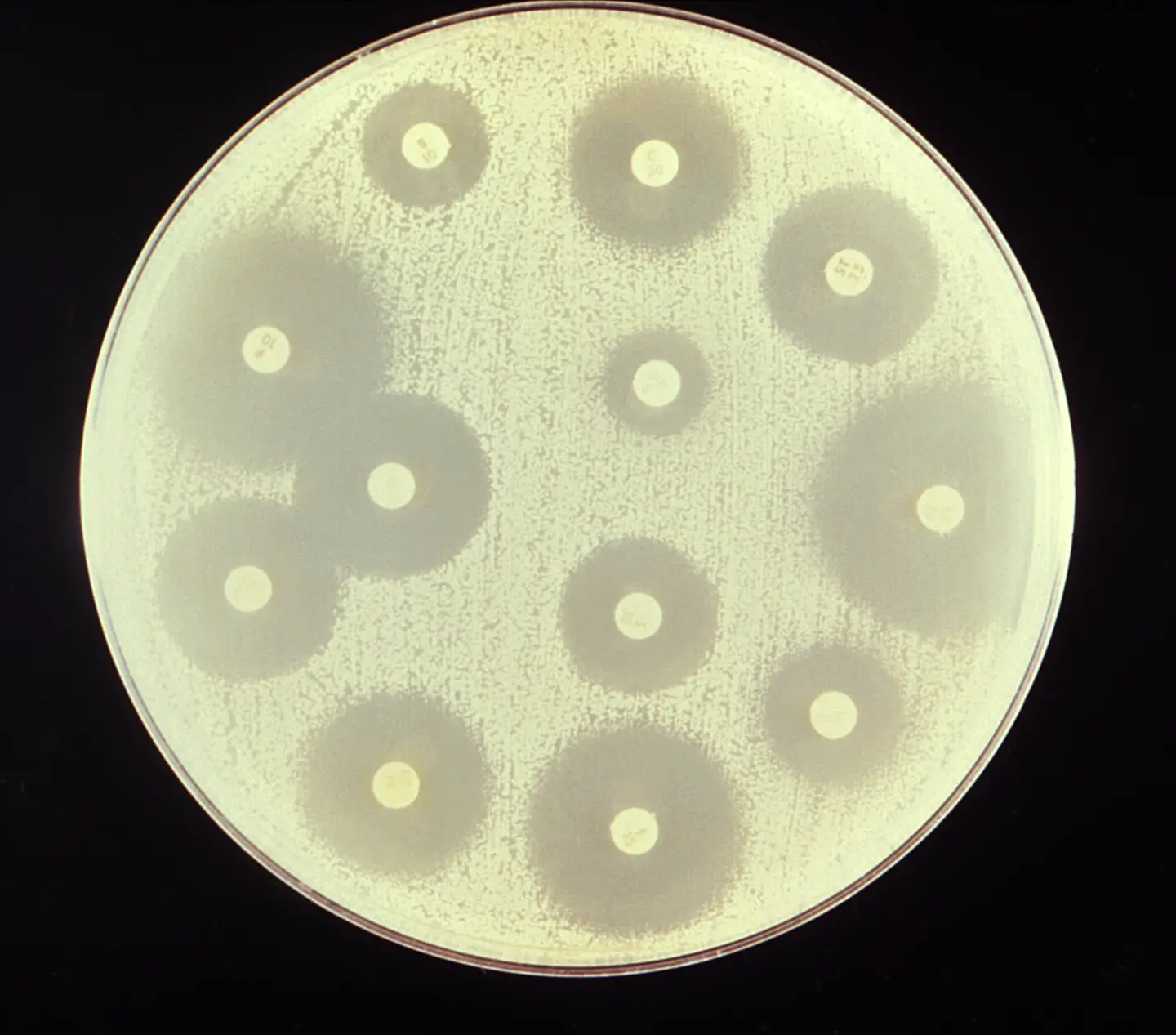
There are three components to natural selection: variation in the population, inheritance of variation, and differences in survival and reproduction. All these are abundantly available from bacteria. Bacteria multiply by dividing in half, and under optimal conditions can double in number every 20 minutes – which means that one infection can result in billions of bacterial cells. The rate of random mutation during their DNA replication is estimated to be 1 mutation per 10⁶ to 10⁹ cell divisions (Galgano et al., 2025, p. 5). Most of these mutations will be of no use to the bacteria, or even harmful, but with such large populations, mutations that give resistance to a specific antibiotic will be likely to occur by chance. Importantly, mutations arise at random, not as a targeted response to the antibiotic – the antibiotics kill susceptible bacteria, and the resistant ones that are already present survive and multiply to fill the niche (Hasan et al., 2021, p. 12). A specific antibiotic, therefore, exerts a selection pressure that allows bacteria already resistant to it to grow.
How Resistance Spreads
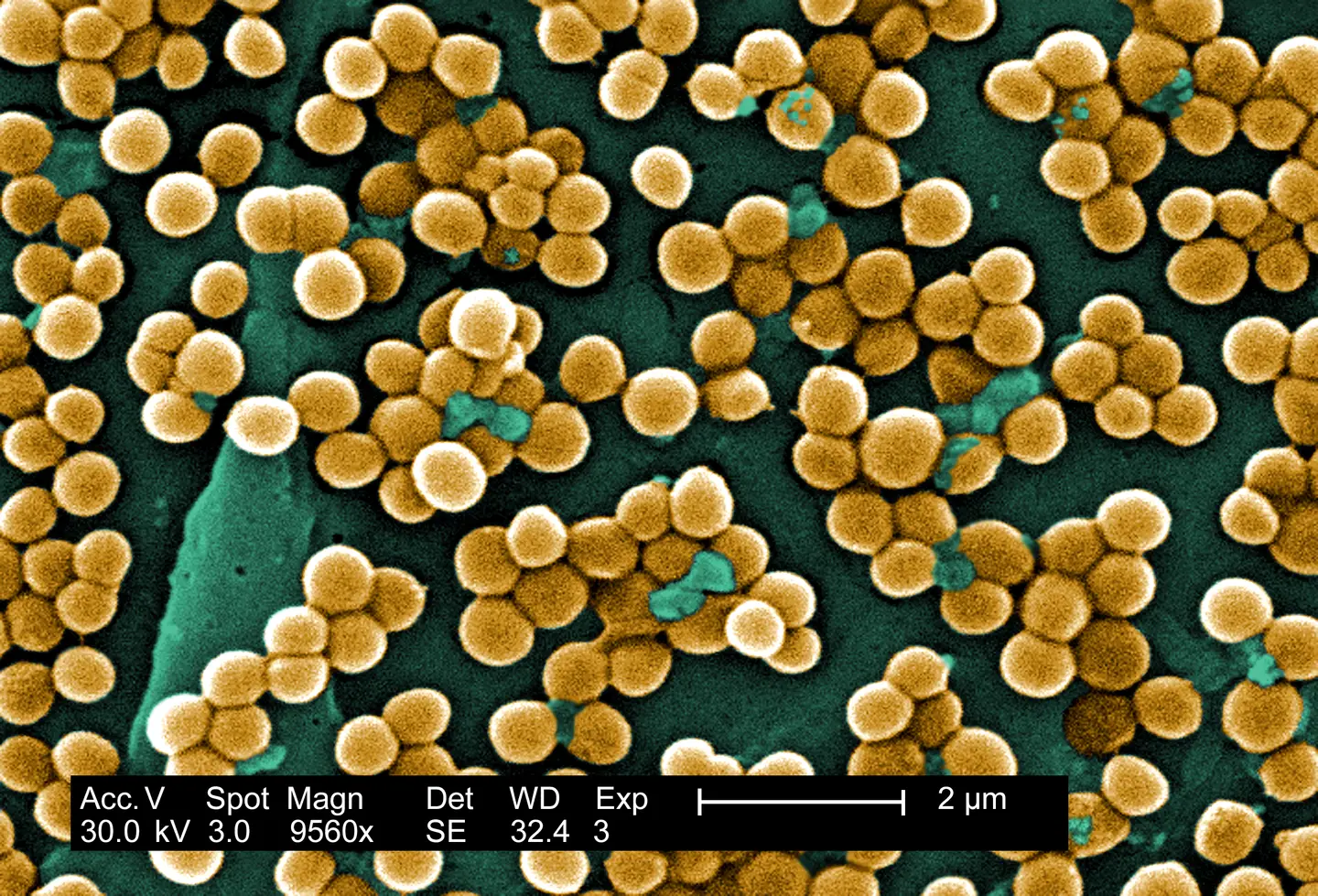
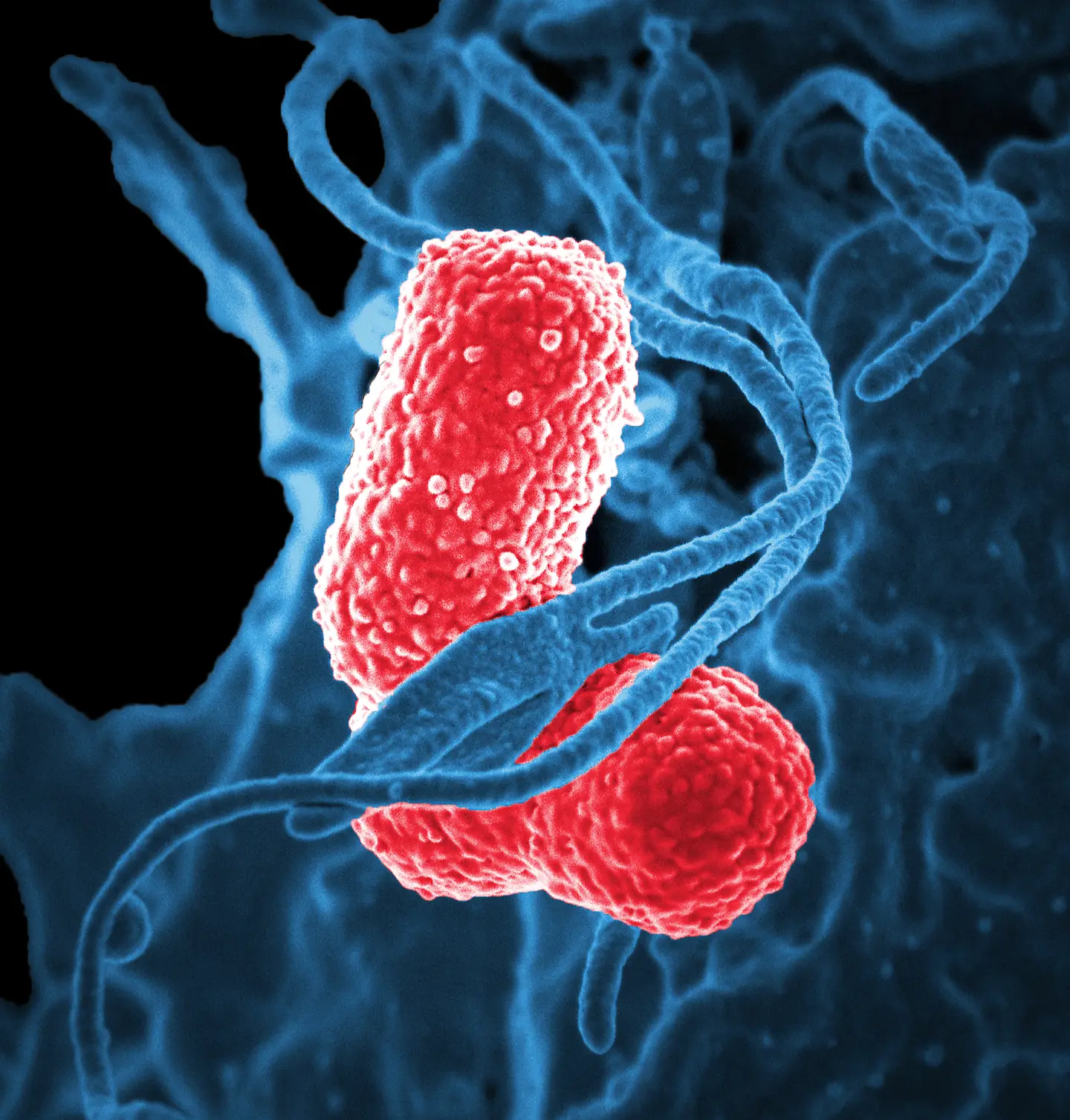
In addition, bacteria can share the genes to resist the drugs, enabling evolution to occur at greater speed. This can be done by conjugation (direct transfer of genetic material from one bacterium to another), transduction (genetic material is carried from one bacterium to another by bacteriophages – viruses that infect bacteria) and transformation (free extracellular genetic material is absorbed by the bacterium) (Tahmasebi et al., 2025, p. 4). Resistance genes are commonly carried by plasmids, small pieces of DNA that are often transferred between bacteria. For instance, blaNDM-1 is the gene that encodes NDM-1, which makes Enterobacteriaceae bacteria resistant to carbapenems, a class of antibiotics that is effective against many multidrug-resistant Enterobacteriaceae bacteria, and the gene has been disseminated by these bacteria (Tahmasebi et al., 2025, p. 4). MRSA – a strain of Staphylococcus aureus resistant to methicillin – acquired its resistance through gene transfer as well, and resistance can also be “intrinsic” – for instance, Escherichia coli is naturally resistant to vancomycin (Tahmasebi et al., 2025, p. 6).
Human Behaviour in Accelerating Antibiotic Resistance
Resistant strains are bound to emerge, but the emergence of resistant strains has been greatly hastened by human behaviour. Any use of antibiotics that is not appropriate can be a strong selective pressure. Globally, more than 50% of antibiotics are given to animals in agriculture – 131,109 tons were consumed in 2013, and the number is projected to exceed 200,000 tons by 2030 (Galgano et al., 2025, p. 21). This selects for resistant strains of bacteria, which can then infect humans. Hospitals are also an epicenter of resistant bacteria, as bacteria with resistance mechanisms thrive and multiply where antimicrobials are used (Tahmasebi et al., 2025, p. 13). History has taught us how quickly this can happen: by the time methicillin, which was developed to treat bacteria that penicillin could no longer kill, was introduced in 1959, about 80% of Staphylococcus aureus strains were already resistant to penicillin, and strains resistant to methicillin appeared shortly afterwards (Tahmasebi et al., 2025, p. 6). Resistance to any given antibiotic seems to be inevitable after its introduction; the next step is simply a matter of time.
The Consequences of Antibiotic Resistance
The impact of antibiotic resistance is enormous: resistant infections result in longer hospital stays, higher costs and death from infections that could once be easily cured. Major medical procedures and interventions (surgery, chemotherapy, organ transplantation) depend on the use of antibiotics that prevent infection, and all of them become far more dangerous if the infection is resistant to the antibiotic (Tahmasebi et al., 2025, p. 10).
Strategies to Preserve Antibiotics
Can there be any hope in this battle? Naturally, there is none in preventing natural selection – but there are several things that can be done to slow it down to manageable rates. Physicians should prescribe antibiotics only when they are really needed, patients should take them as prescribed, and the use of antibiotics in agriculture should be significantly reduced. New strategies – including phage therapy, vaccination, improved hygiene in hospitals and collaboration at the “One Health” level, which considers the health of humans, animals and the environment – can diminish the selective pressures on bacteria and slow down the emergence of resistant strains (Galgano et al., 2025, p. 25).
Conclusion
Antibiotic resistance presents a terrifying prospect and natural selection is a part of the problem, but it is far from the whole. Variation comes from random mutations; resistance genes can be transferred between bacteria and we select for bacteria that can survive antibiotic treatment. Since bacteria reproduce extremely rapidly and will always evolve in response to selective pressures, resistance cannot be completely prevented. But with proper use of antibiotics, the selective pressures they place can be markedly diminished and humanity can continue to reap their benefits for years to come.