I have often been told how special it is to live in a nation built on an idea. The United States Constitution was first developed with the intention of establishing a democracy that might be for the people and by the people. Such documents taken alone, in a vacuum, appeared perfectly written. How could someone disagree with the premise of the Preamble, to “establish Justice, insure domestic Tranquility, provide for the common defence, promote the general Welfare, and secure the Blessings of Liberty to ourselves and our Posterity”? No one really can, and after taking time to look at it and see how these ideas played out in reality, we have gotten ever closer to reaching a true democracy.

While the foundation of the U.S. Constitution is based on the idea of equality and fairness, in the entire history of our great nation’s democracy, such values have not been fully upheld for all Americans. The idea of democracy formed in fragile times, within a dichotomous personhood: the architects of the Constitution, and those who framed the buildings on our land. The founding documents and our Constitution were written by powerful, landholding men who were protesting the monarchy and tyranny, yet constructed at a time when they also excluded the most vulnerable members of society (Harper 108). The word “all” did not indicate all individuals because it was not written in the interest of individuals of all genders and economic classes as well as skin colors, cultural backgrounds, and racial identities.
This means that true democracy is perfect in theory but the application might be problematic. But such a heavily rooted flaw exposes the best attribute of our democracy: that we the people have the opportunity to change it. The Declaration of Independence says, “But when a long train of abuses and usurpations, pursuing invariably the same Object evinces a design to reduce them under absolute Despotism, it is their right, it is their duty, to throw off such Government, and to provide new Guards for their future security” (National Archives, par. 2). We have the democracy to such freedom and we have to stand up for our rights and make changes within our society.
People had the blessed privilege to vote for those who amended the Constitution and established laws to make this nation more equitable. We, the people, wanted access to the full promises of the Constitution. The end of slavery and racial segregation fought by African Americans reflects such privileges. They believed in freedom and true democracy for all and used the power of the Constitution to push for the creation of the 15th Amendment that granted them the right to vote and the Civil Rights Act of 1964 (Harper 103). When women were not allowed to vote for the nation they built, they held the power to change. They started to push for the 19th Amendment, which gave them the right to vote in 1920.
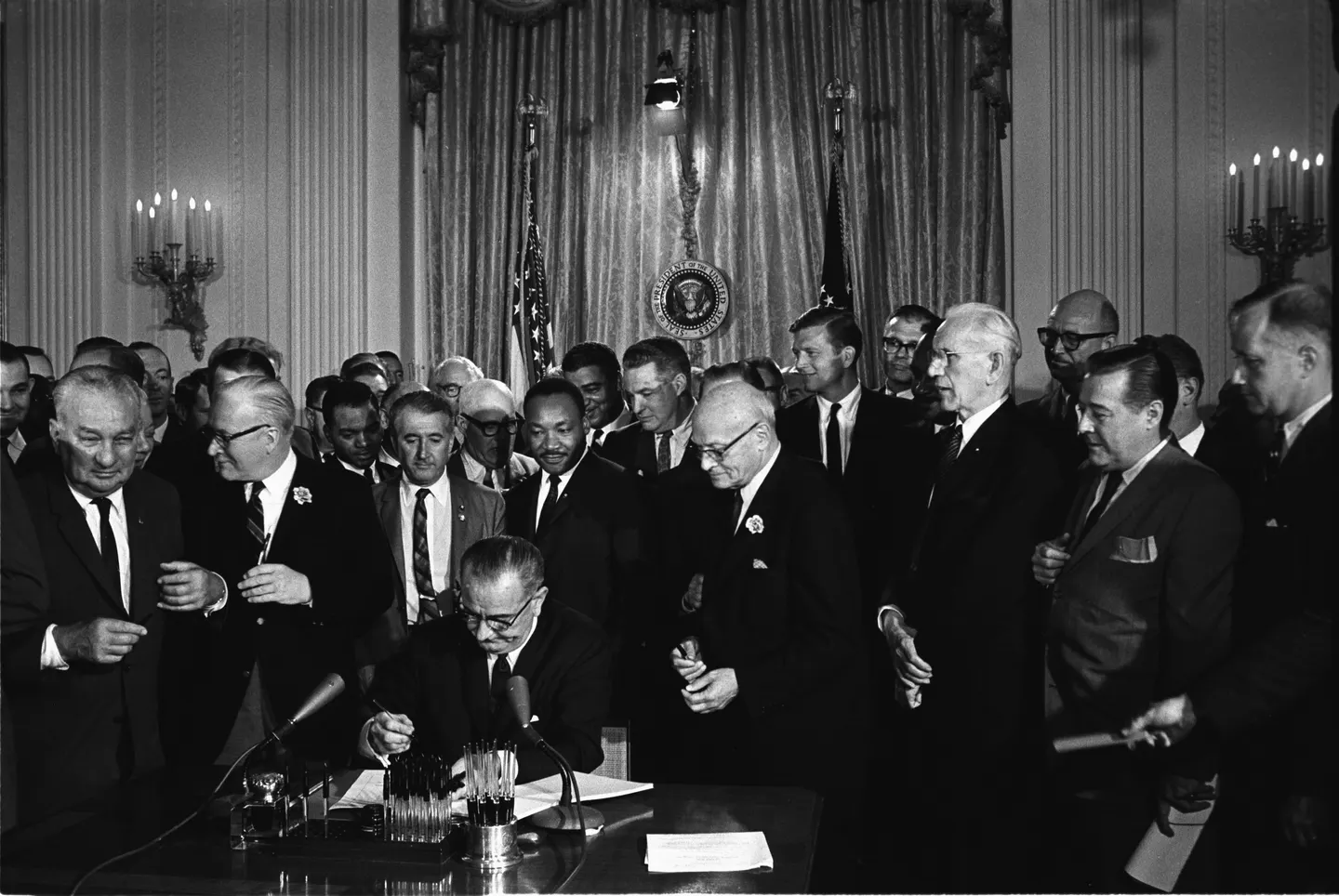
While social barriers might make it hard to establish immediate change, change is not just possible, but the constant of our democracy. Such power to make change comes from the root of the founders’ principles, building opportunities to eventually overcome the barriers, slowly but confidently. No matter what fears might come from autocrats, this country can still live up to its highest principles with the power of democracy. But this requires us all to take the hammer and nail to preserve the structure of our frame because our foundation is strong. This means that we have to take the utmost advantage of our democracy’s greatest attribute: the power to change.