Introduction
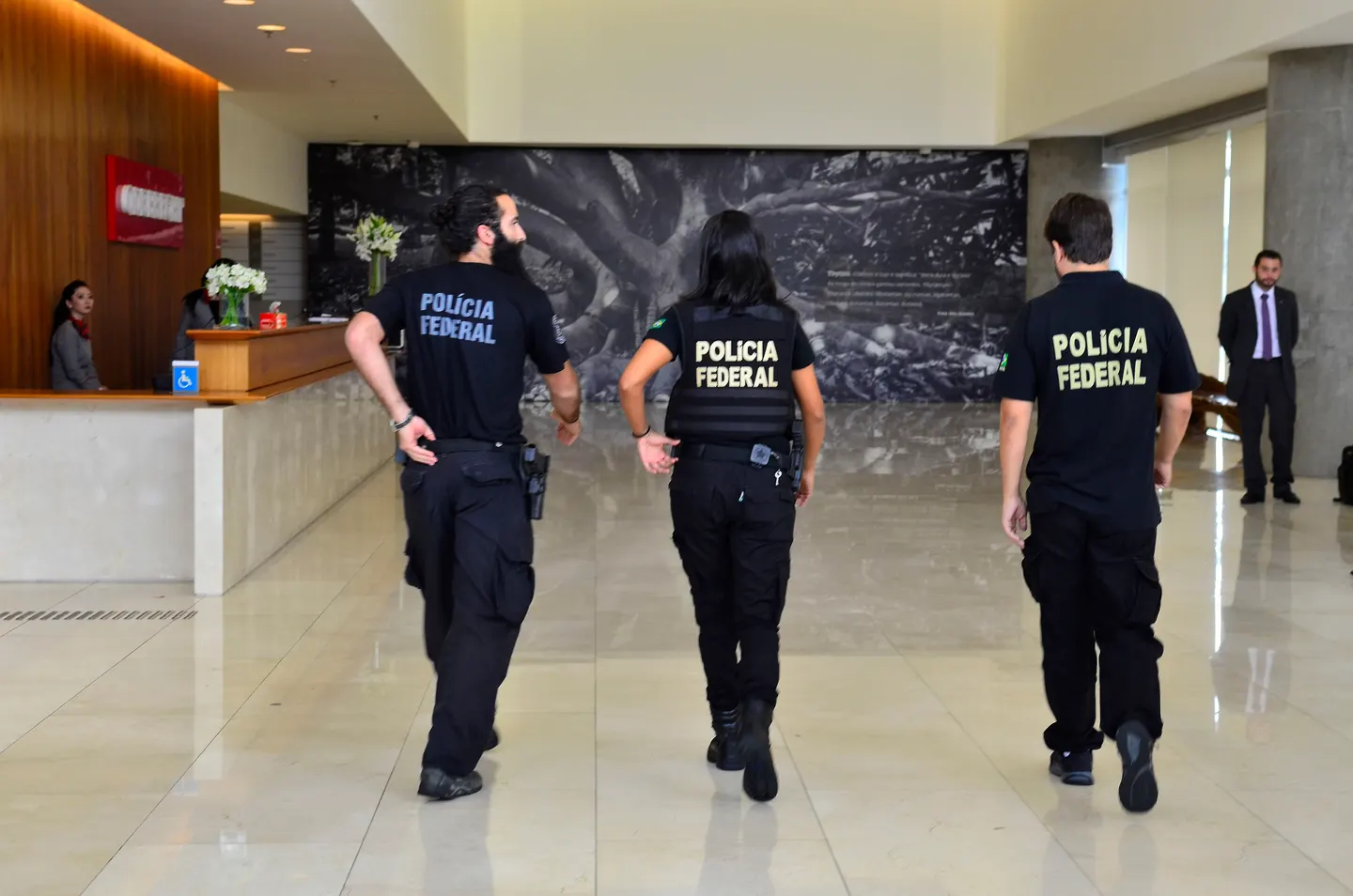
Political corruption is the abuse of public authority for personal, party or business profit. Corruption is present in Brazilian public contracting, political financing and government enterprises as citizens’ trust in democratic institutions. It is particularly noticeable in the country’s Operation Car Wash, Lava Jato, which uncovered an alleged scheme of bribery between top executives, construction firms and political parties. However, corruption in Brazil is not a problem of individuals alone, but also the results of political networks, inadequacy in oversight and inconsistent accountability.1 This study claims that political corruption is a negative force for Brazil, as it siphons public resources, weakens democratic legitimacy, contributes to inequality and reduces the trust in institutions. It further asserts that the fight against corruption should abide by the rule of law and institutional independence to achieve sustainable change.
Corruption, Public Resources, and Economic Performance
Corruption is one of the direct impacts on public spending. Public procurement decisions can be influenced by non-price considerations, such as social need, if officials take part in the process as part of a “private relationship.” This may lead to exaggerated expenditure, substandard infrastructure and fewer funds for health, education, sanitation and transport. Public money can be diverted in complex links between politicians, public enterprises and private companies in large contracting schemes. The Petrobras scandal in Brazil was an example of how the role contracts and appointments can play in a scheme of kickbacks rather than in generating public value.
Corruption also adversely impacts the broader economy. It undermines fair competition, deters productive investment and fosters doubts regarding the application of regulations and contracts. Corruption in Brazil extends from their habits to the wider political, economic and social systems, highlighting that combating it cannot be achieved only by punishing a few high-profile individuals.2
Democratic Legitimacy and Public Trust
Political corruption harms democracy, because it provides a financial platform for powerful actors that common people cannot compete with. Public officials who trade state goods and services for campaign support, appointments or personal gain are more likely to make policies that are less responsive to voters. Corruption thus undermines political equality. Citizens can have equal votes, but have different influence on the decisions made between elections. Corruption impacts the democratic values and lets those who practice it gain political benefits that are not available as a result of legitimate competition.
The frequent scandals could also begin to diminish trust in elected officials and public institutions. If citizens lose faith in government information because of suspicions of a hidden agenda, they may not trust its decisions, or engage in traditional politics. If they do not trust politicians, they will become cynical and perceive all of them as being similar. This will make politicians who want to reform lose people’s trust.
Brazil’s score (0–100)
52.4 in 2011, the highest; 38.6 in 2017, the lowest; 40.4 in 2025.
1997, 1999 and 2001 have no bar: before 2002 the World Bank published the indicators every second year. Each score is an estimate with a 90% margin of error of about 5 to 7 points either way, so a change from one year to the next is rarely meaningful; every year from 2015 to 2025 lies entirely below the margin around 2011 (47.2 to 57.6). Operation Car Wash began in March 2014. The score does not show what caused a change.
Chart by Writers Per Hour from the World Bank’s Worldwide Governance Indicators, 2026 update (Control of Corruption, governance score; retrieved 29 October 2026 from the World Bank Data API; licence CC BY 4.0). What the score covers: the Control of Corruption note; how it is built and read: the methodology paper. Start of Operation Car Wash: CNN Brasil. The paper does not cite these figures.
Show the score for every year
| Year | Brazil’s score (0–100) |
|---|---|
| 1996 | 50.4 |
| 1997 | — |
| 1998 | 51.4 |
| 1999 | — |
| 2000 | 50.2 |
| 2001 | — |
| 2002 | 50 |
| 2003 | 49.1 |
| 2004 | 45.9 |
| 2005 | 43 |
| 2006 | 43.6 |
| 2007 | 42.2 |
| 2008 | 46.2 |
| 2009 | 47.3 |
| 2010 | 47.8 |
| 2011 | 52.4 |
| 2012 | 47.6 |
| 2013 | 46.5 |
| 2014 | 42.9 |
| 2015 | 41 |
| 2016 | 41.3 |
| 2017 | 38.6 |
| 2018 | 39.4 |
| 2019 | 40.5 |
| 2020 | 41.2 |
| 2021 | 39.9 |
| 2022 | 38.8 |
| 2023 | 39.2 |
| 2024 | 40.1 |
| 2025 | 40.4 |
Anticorruption Campaigns and the Rule of Law
The lessons of Operation Car Wash were that both the promise and the peril of zealous anticorruption prosecutions were on display in the case. The inquiry uncovered a massive amount of misconduct and exposed that there were strong political and business interests that could be held to criminal trial. The operation also caused controversy. Anticorruption institutions can become less credible when they engage in public exchanges that seem to be politically motivated, or when they ensure that the rule of law is not treated as an impediment, but rather as a crucial protection.
Public participation can be impacted by the variation in judicial killings. If investigators make inconsistent decisions about who to pursue and convictions are dependent on political conditions, citizens may think it is pointless or risky to report corruption.3 Severe penalties are not enough to combat corruption as effective enforcement must be done. Investigations must be based on evidence; courts have uniform standards and defendants be given a fair trial. Institutions that can expose wrongdoings and have clear legal mechanisms that limit their power are most accountable.
Social Inequality and the Quality of Public Services
Social costs of corruption are inequitably shared. Without adequate funding and management of schools, hospitals, transport systems, and local infrastructure, low-income households face a greater reliance on the public services they receive and limited options. The consequences of public funds diverted, therefore, are not just financial; they can also include delayed treatment, crowded classrooms, unsafe roads and less access to vital services. Corruption can be a mechanism through which inequality can be reproduced because the benefits of public services may accrue to a few more powerful groups, while costs are passed on to everyone else.
If citizens think that resources are fairly collected and used, they will be more likely to accept taxes and public rules. When public institutions are seen to serve “insiders,” there may be a drop in compliance. This fosters a vicious circle. Lack of trust undermines cooperation with the government, and poor oversight makes corruption more likely to occur.4
Recommendations for Reform
First, public procurement needs to be based on open, searchable contract data, strict conflict-of-interest guidelines, competitive tendering and independent audits. The release of contract changes and beneficial ownership data would assist journalists, citizens and oversight bodies spot irregularities. Second, political financing and lobbying should be transparent and there should be meaningful penalties for undisclosed funding and use of public resources for election purposes. Third, audit bodies, prosecutors and courts must have sufficient resources and be protected from political pressure, and still be held to account and open to judicial oversight.
Fourth, there should be protection for whistle-blowers and investigative journalists against reprisal. Reporting avenues should be available and safe. Fifth, civic education and participatory budgeting can enable citizens to monitor local spending and learn how to confront misbehavior. In addition, performance should not be assessed only on the basis of the number of arrests and convictions, but also on competitive bids for prosecutions, quality of service, timely disposition of cases, and public confidence. Such actions can help to curb opportunities for corruption without risking the possibility of anticorruption campaigns being used as political weapons.
Conclusion
Political corruption has an impact on Brazil’s economic, democratic, social, and public trust systems. It takes resources away from necessary services, promotes political connections over competitiveness, and undermines trust in government in the public interest. The most resilient response Brazil can make, therefore, is to reinforce public administration that is transparent, independent, has consistent standards and citizens’ participation. If public decisions are transparent and institutions are credible, Brazil can mitigate the costs of corruption and strengthen democratic government’s legitimacy and effectiveness.