Climate change is, at its heart, an energy problem. Burning coal, oil and gas for electricity, heat and transport is the main source of the greenhouse gases that are warming the planet, so any serious response has to change how energy is produced and used (IPCC, 2022). Few options divide opinion as sharply as nuclear power. Supporters describe a reliable, low-carbon source that can run day and night, while critics describe an expensive and slow technology that diverts money from faster solutions. This essay argues that nuclear energy is not the answer to climate change, because no single technology can be, but that it is a valuable part of the answer. Its strengths in reliability and scale are real, yet its high costs and long construction times mean it should complement renewable energy rather than replace it.
The strongest argument for nuclear power is that it is already working at scale. The Intergovernmental Panel on Climate Change (IPCC) reported that nuclear plants supplied 10 per cent of the world’s electricity in 2019, more than solar and wind combined (IPCC, 2022, cited in World Nuclear Association, 2022). According to the International Energy Agency (IEA, 2025), nuclear power was responsible for just under 10 per cent of the world’s electricity production and was set to produce a record amount of electricity in 2025. As the reactors do not produce much carbon dioxide during operation, every kilowatt hour they produce instead of coal or gas reduces emissions. Nuclear power is therefore no longer an experimental concept that needs to be proven, but a proven technology with decades of operating experience.
- Fossil fuels
- Bioenergy
- Renewables
- Nuclear
- Lowest to highest estimate
- The essay’s subject
Median estimate, g CO₂-eq per kWh
- Coal (pulverised): median 820; estimates range from 740 to 910 g CO₂-eq per kWh.
- Biomass, co-fired with coal: median 740; estimates range from 620 to 890 g CO₂-eq per kWh.
- Gas (combined cycle): median 490; estimates range from 410 to 650 g CO₂-eq per kWh.
- Biomass, dedicated plant: median 230; estimates range from 130 to 420 g CO₂-eq per kWh.
- Solar PV, utility-scale: median 48; estimates range from 18 to 180 g CO₂-eq per kWh.
- Solar PV, rooftop: median 41; estimates range from 26 to 60 g CO₂-eq per kWh.
- Geothermal: median 38; estimates range from 6.0 to 79 g CO₂-eq per kWh.
- Concentrated solar power: median 27; estimates range from 8.8 to 63 g CO₂-eq per kWh.
- Hydropower: median 24; estimates range from 1.0 to 2,200 g CO₂-eq per kWh.
- Nuclear: median 12; estimates range from 3.7 to 110 g CO₂-eq per kWh. The essay’s subject.
- Wind, offshore: median 12; estimates range from 8.0 to 35 g CO₂-eq per kWh.
- Wind, onshore: median 11; estimates range from 7.0 to 56 g CO₂-eq per kWh.
These are medians of estimates from published studies, not measurements of one plant. Hydropower’s highest estimate, 2,200, runs past the scale and is cut at its edge. The IPCC’s table also lists carbon capture and storage and ocean technologies, which were not yet in commercial use; they are left out here.
Chart by Writers Per Hour from Table A.III.2 of Annex III: Technology-specific Cost and Performance Parameters in the Working Group III contribution to the IPCC’s Fifth Assessment Report (2014, p. 1335): technologies currently commercially available, life-cycle emissions as the table gives them. The essay does not cite these figures.
Show every figure as a table
| Source of electricity | Median | Lowest–highest |
|---|---|---|
| Coal (pulverised) | 820 | 740–910 |
| Biomass, co-fired with coal | 740 | 620–890 |
| Gas (combined cycle) | 490 | 410–650 |
| Biomass, dedicated plant | 230 | 130–420 |
| Solar PV, utility-scale | 48 | 18–180 |
| Solar PV, rooftop | 41 | 26–60 |
| Geothermal | 38 | 6.0–79 |
| Concentrated solar power | 27 | 8.8–63 |
| Hydropower | 24 | 1.0–2,200 |
| Nuclear | 12 | 3.7–110 |
| Wind, offshore | 12 | 8.0–35 |
| Wind, onshore | 11 | 7.0–56 |
A second advantage is reliability. Wind and solar power depend on the weather and the time of day, which means electricity grids need backup or storage when output falls. Nuclear plants meanwhile can produce a continuous supply of power 24/7. The IEA (2025) notes that businesses are looking at nuclear as a reliable, competitive and clean power option for round the clock energy needs in their critical systems that consume large amounts of energy. This is important as electricity demand continues to increase, including by data centres and artificial intelligence (IEA, 2025). There is also a growing momentum as over 70 GW of new nuclear power projects are currently being built globally, while over 40 countries have plans to play a larger role for nuclear power in their energy systems (IEA, 2025). These are desirable features for governments wishing to reduce emissions without compromising on blackout risks.
It is worth noting how the IPCC itself frames the issue. Its assessment of mitigation recommends a broad-based approach, deploying many energy options to cut emissions over the next ten years and to prepare for deeper reductions after 2030 (IPCC, 2022, cited in World Nuclear Association, 2022). Nuclear power appears in that assessment alongside renewable sources and fossil or bioenergy with carbon capture, as one of several low-carbon options rather than a standalone solution (IPCC, 2022, cited in World Nuclear Association, 2022). The World Nuclear Association (2022), an industry body, argues that the first priority should be to maximise the contribution of existing reactors. This is a sensible point, since keeping a working plant open avoids the cost and delay of building a replacement.
The case against nuclear power rests mainly on cost and time. The clearest recent example is the Vogtle expansion in Georgia, in the United States. Its two new reactors were first estimated at more than 14 billion US dollars, but by early 2022 the price had climbed past 30 billion dollars, and both units were expected to be more than six years late (IEEFA, 2022). Customers had already paid more than 3.5 billion dollars in financing costs since 2011, more than a decade before either unit would produce any electricity (IEEFA, 2022). Delays of this kind matter for climate policy because the IPCC stresses the need to reduce emissions within the current decade (IPCC, 2022, cited in World Nuclear Association, 2022). A power plant that takes well over ten years to build cannot contribute much to that near-term goal, whereas wind and solar projects are generally built far more quickly.
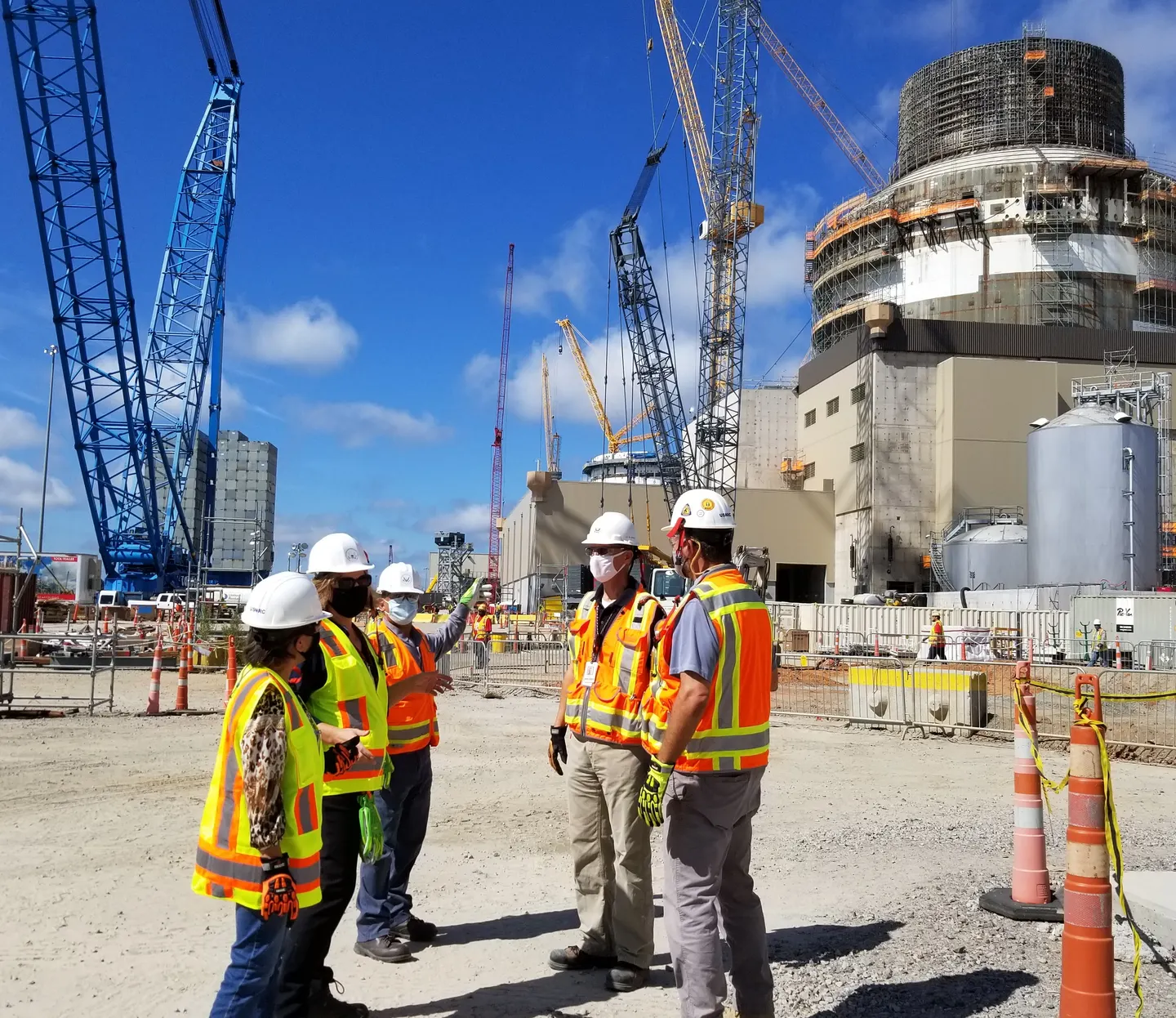
The IEA (2025), which describes a comeback for nuclear power, admits that such problems are not unique to one project. It warns that governments and industry must first deliver new projects on time and on budget, and must also secure financing and reliable supply chains. It adds that public money alone will not be enough, and that private investment will be needed to expand nuclear power. In other words, even the strongest institutional supporters of nuclear energy treat cost and delivery as unsolved challenges rather than minor details.
Concerns about safety and waste also deserve fair treatment. The challenging times of the industry following the Fukushima accident in 2011, however, prompted many governments to review their plans (IEA, 2025). The amount of radioactive waste generated is very small relative to the amount of energy produced, but it must be stored securely for very long periods and many countries have not yet determined permanent solutions. These issues are manageable for technically capable states, yet they can slow political decisions and raise costs further. They also contribute to understanding the reasons why some countries, such as some in the IEA, do not see a place for nuclear in their future (IEA, 2025).
Supporters respond that new designs may fix these weaknesses. The IEA (2025) states that small modular reactors (SMRs), with the support of new business models and government support, can help reduce financing costs and contribute to a new era in nuclear power. SMRs are smaller, and may therefore be built faster and at lower costs than large plants. This is still a promise, however, and the IEA remains cautious, noting that SMRs can help if they are proven to be cost competitive. Vogtle also demonstrates what can happen when a nation that has built few nuclear reactors in recent years attempts to re-open the nuclear business. Therefore, between countries there may be variations in cost outcomes, especially in countries with a large share of projects in progress, like China (IEA, 2025).
In summary, nuclear energy is best understood as a supporting actor rather than the lead based on the evidence presented. Its output is low-carbon, reliable and proven at scale, and it would be unwise for any country serious about the goals of the Paris Agreement to close working reactors early. Yet the record of cost overruns and delays means that new reactors cannot be the main tool for cutting emissions this decade. The most defensible strategy is a mixed one: keep existing plants running safely, expand wind, solar and storage quickly, and build new nuclear capacity where costs, public support and financing allow. Nuclear power, then, is not the answer to climate change, but a climate policy that ignores it risks making the answer harder to reach.