Vincent van Gogh’s The Starry Night turns a familiar landscape into an emotional experience. Painted in 1889, this oil painting shows a village beneath a sky filled with shining stars, a bright moon, and twisting bands of light.1 In the foreground, there is a tall, dark cypress tree rising into the sky, while in the background, there are hills that observably separate the village from the rest of the landscape. The painting invites viewers to experience nature as active and more importantly, larger than human life. Overall, through a carefully balanced composition, Van Gogh creates tension while leaving room for hope.
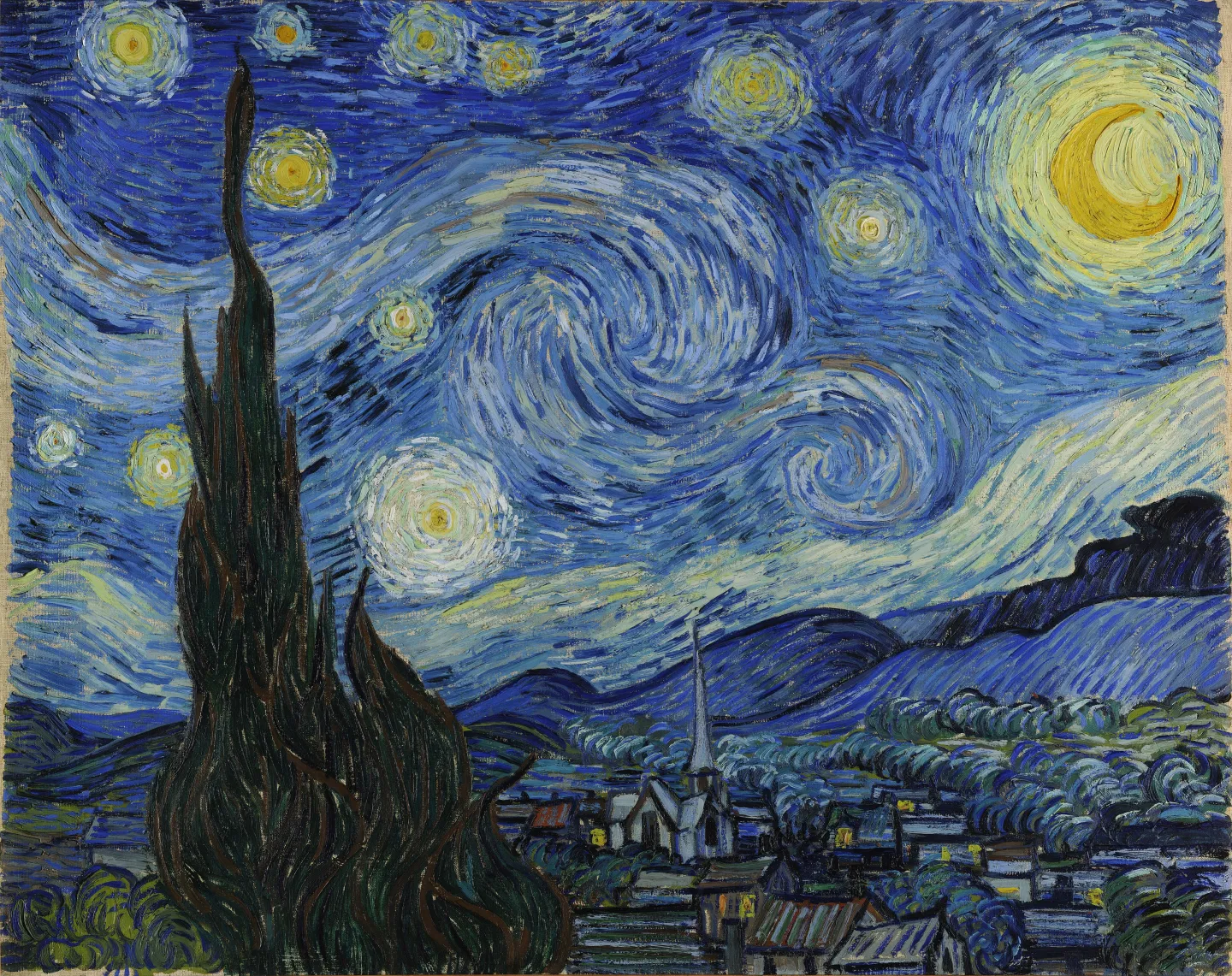
Color is central to the painting’s emotional effect. The sky is filled with deep blues, and the hills (including village) are also shaded with shades of blue. Such cool shades establish the feeling of night, but they do not make the scene lifeless. The stars are large and close, with yellow and white circles highlighting them against the blue background. They are brightly coloured and attract the attention of the viewer to look up from the smaller buildings underneath. The moon also shines brightly, which adds a sense of weight to the upper corner, counterbalancing with the dark tree on the opposite side. This is an example of the way that colour can help to structure a painting and to create an atmosphere. The stars might indicate comfort, as they are present in the darkness. However, their size can be quite great that they feel overwhelming, like they have more energy than the village. Small touches of lighter color among the houses connect the human setting to the sky without making them equally bright. The resulting contrast allows calm and unease to exist together. Notably, through stressing light and dark, and varying the intensity of each, Van Gogh highlights differences in emphasis; Van Gogh thus does not assign equal importance to all objects. Night becomes a setting for emotional uncertainty as well as beauty.
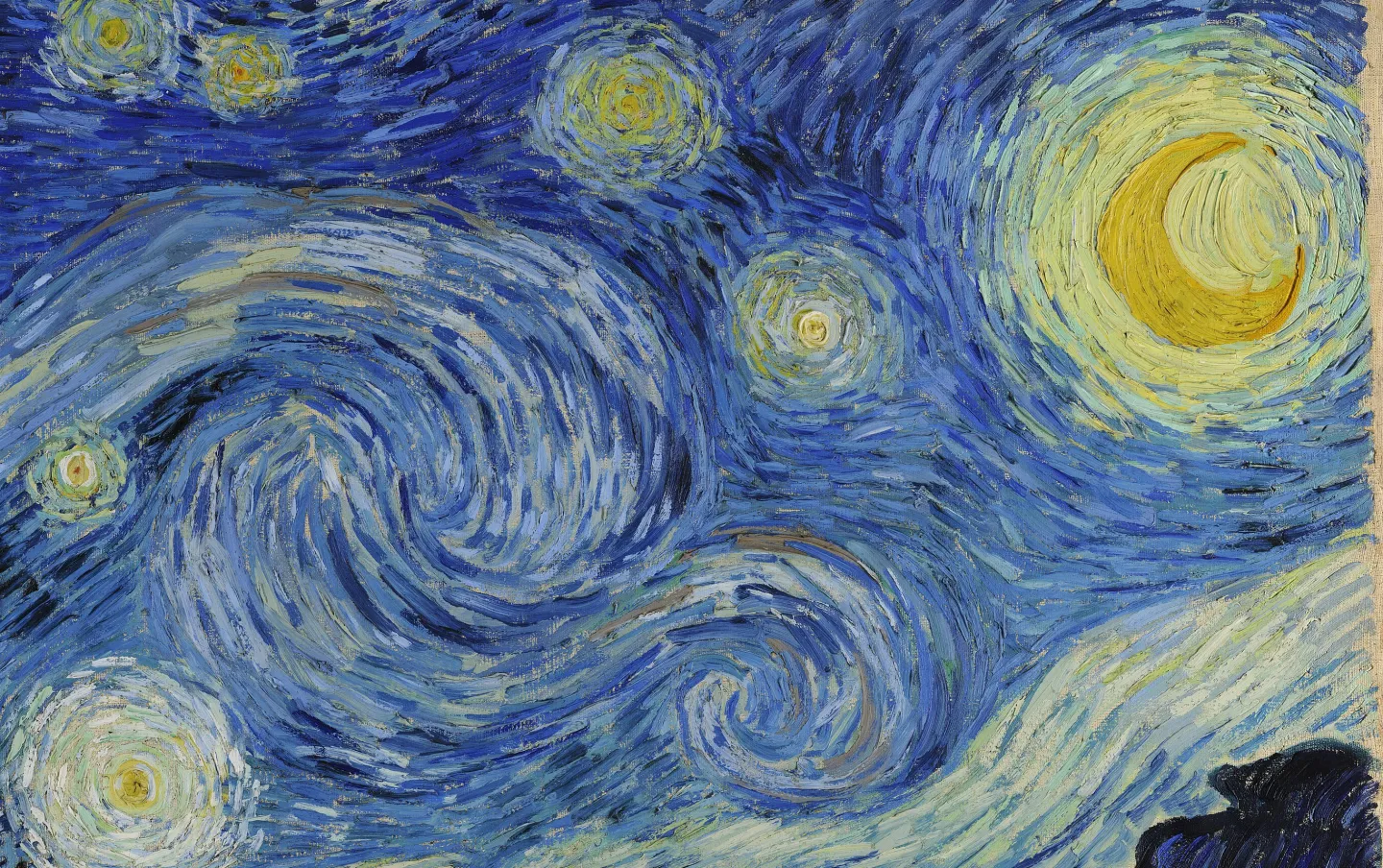
The brushwork strengthens this tension by making the sky appear to move. The curved strokes swirl around the stars and make large, winding forms in the middle. Such repeated marks create rhythm in the painting. Their changing directions suggest currents of wind or water, even though the image itself remains still. Ma and colleagues explain that “the arrangement of the eddy-like formations crafted by Van Gogh resembles the energy transfer mechanism” found in turbulent flows.2 Their analysis supports the observation that the painted swirls have relationships resembling movement in nature. It does not establish that Van Gogh consciously applied scientific theories. For an art viewer, the important effect is the convincing sense of energy created by the strokes. The visible marks also remind us that a person shaped this scene through individual decisions. Short strokes around the stars create concentrated activity, while longer curves move to carry movement across larger areas. Together, these differences make the sky feel connected rather than randomly crowded. The painting’s surface becomes part of its meaning: the viewer encounters both a landscape and the physical traces of its creation.
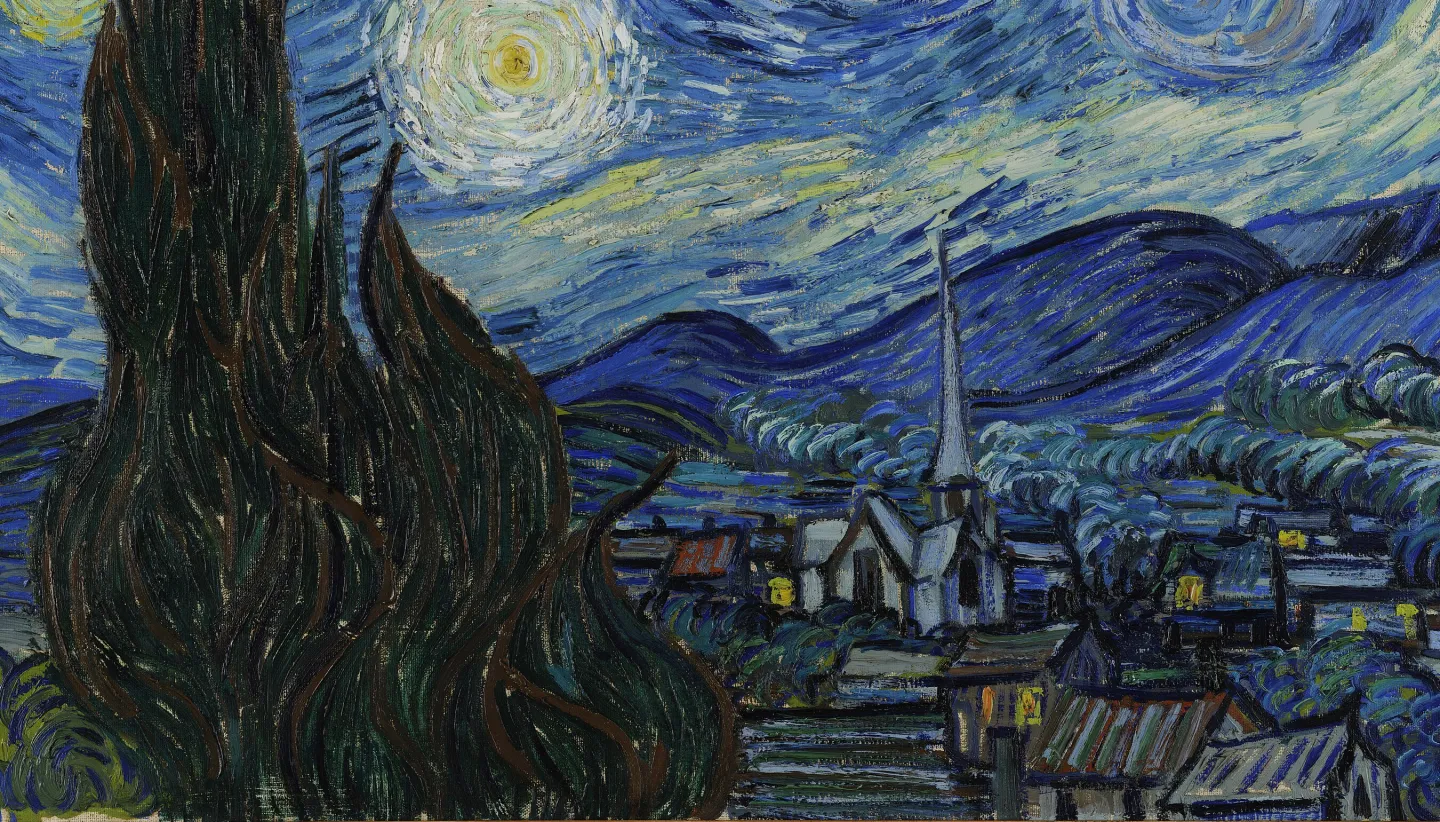
The composition gives this moving sky an emotional setting by placing it above a comparatively quiet village. Small houses cluster together, and the church steeple introduces a clear vertical line. Their familiar forms suggest community and more so, everyday routines. However, the village takes up very little of the sky compared to human life, and this makes human life appear modest beside nature. This is complicated by the presence of the cypress in the foreground. It is a dark, turbulent shape that rises above the horizon line, making a conceptual link between earth and sky. These relationships support a reading of the painting as a search for connection, although they do not prove one fixed symbolic message. Discussing the painting, Atalay writes, “However, it lacks the unity of the original work in terms of meaning and depth.”3 This observation highlights why the original’s parts should be considered together. The tree, buildings, hills, and stars gain emotional force from their relationships. The scene can therefore suggest loneliness without becoming completely hopeless, because the same composition that separates the village from the sky also connects them.
Ultimately, The Starry Night succeeds because its visual choices work together to create a complex but understandable experience. The blending of bright stars with the blue darkness, movement through the brushstrokes, and a quiet village contrast. The cypress brings these various spaces together and also serves as a powerful element within itself. All these features enable the viewer to identify uncertainty and reassurance in the same landscape. The painting is not a painting, which has to have one explanation to be meaningful. What makes it so relevant is the way in which ordinary things from the natural world mirror and serve as a moving representation of human emotions and how we fit into a much bigger world. Its emotional openness gives different viewers space for their own responses.