
Introduction
This internal assessment aims to design a 330 mL soda can that minimizes the surface area while maintaining a fixed volume to reduce production costs. Most manufacturers of Soda Can ensure that they minimize the cost of producing their cans while maintaining a given volume. This may be achieved by decreasing the surface area and the materials used in the production of the Cans. I was always amazed by the Coca-Cola company's ability to create a unique Can. Out of this curiosity, I decided to find out what is Coca-Cola Can Design. I discovered their Can shape had been modified since 1899 until they achieved the current shape. This modification was done to ensure that the cost of production was reduced while maintaining the given volumes of beverages. Upon learning this, I was curious about how the 330 mL Soda Can could be designed to have minimal surface area while keeping the volume constant, and thus making the production of this can more economical.
Mathematical Background and Hypothesis
First, I hypothesize that a 330 mL Coca-Cola Can can be designed with minimized surface area while maintaining a given fixed volume to reduce production costs. In this exploration, I will use the formulae for the surface area of revolution. This formulae is expressed as follows.
The above formula is used to find a given solid's surface area. The formula is obtained by revolving the solid around the x-axis or y-axis (Hass et al., 2022). I will integrate the formula with the limits a and b, obtained after subjecting the Coca-Cola Can to GeoGebra software. This software will be used to model the shape of a Coca-Cola Can to obtain its surface area. I will do this by obtaining the best-fit function for the uploaded Can of Coca-Cola. These functions will include polynomial functions. After obtaining the Coca-Cola Can's surface area, I will design my own Can. I will do this by minimizing the surface area and the cost of production by proving that for a fixed volume, the cost of production will be minimal when the surface area is minimal. Below is the image of the Coca-Cola Can used for this exploration.
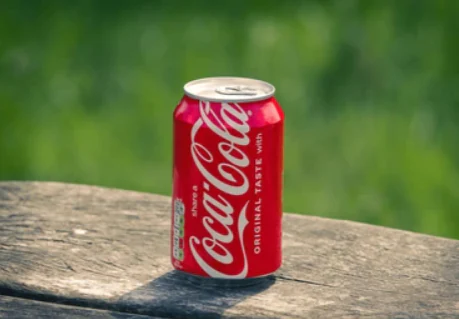
The actual volume of the Can is 330 mL (330 cm³). This volume will remain fixed throughout the exploration when optimizing (minimizing the surface area).
Modelling the Can
Determination of the piecewise function of the Can using GeoGebra
After obtaining the image of the Soda Can, I uploaded it to GeoGebra software. This upload was done to obtain the polyfit function for modelling the surface area and volume of the water Can. The image that results from this upload is as follows:
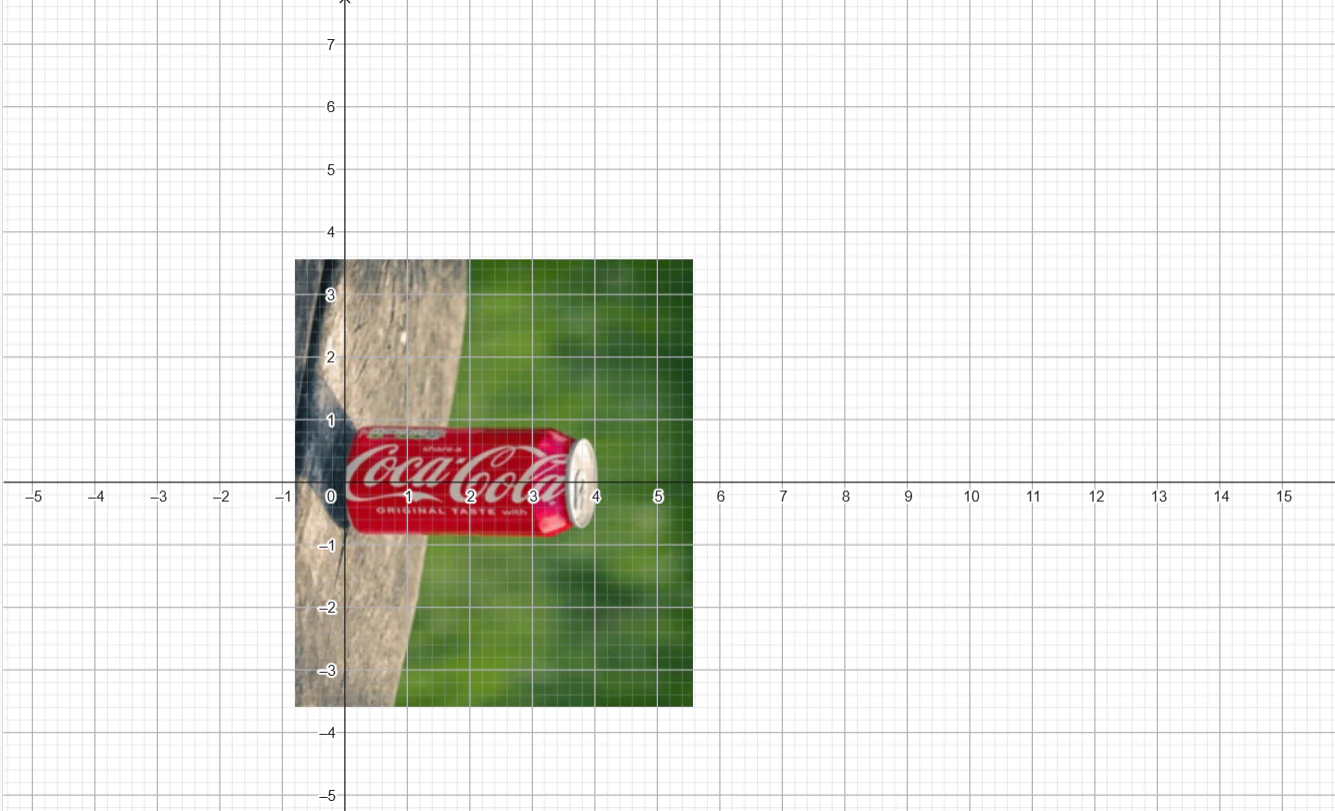
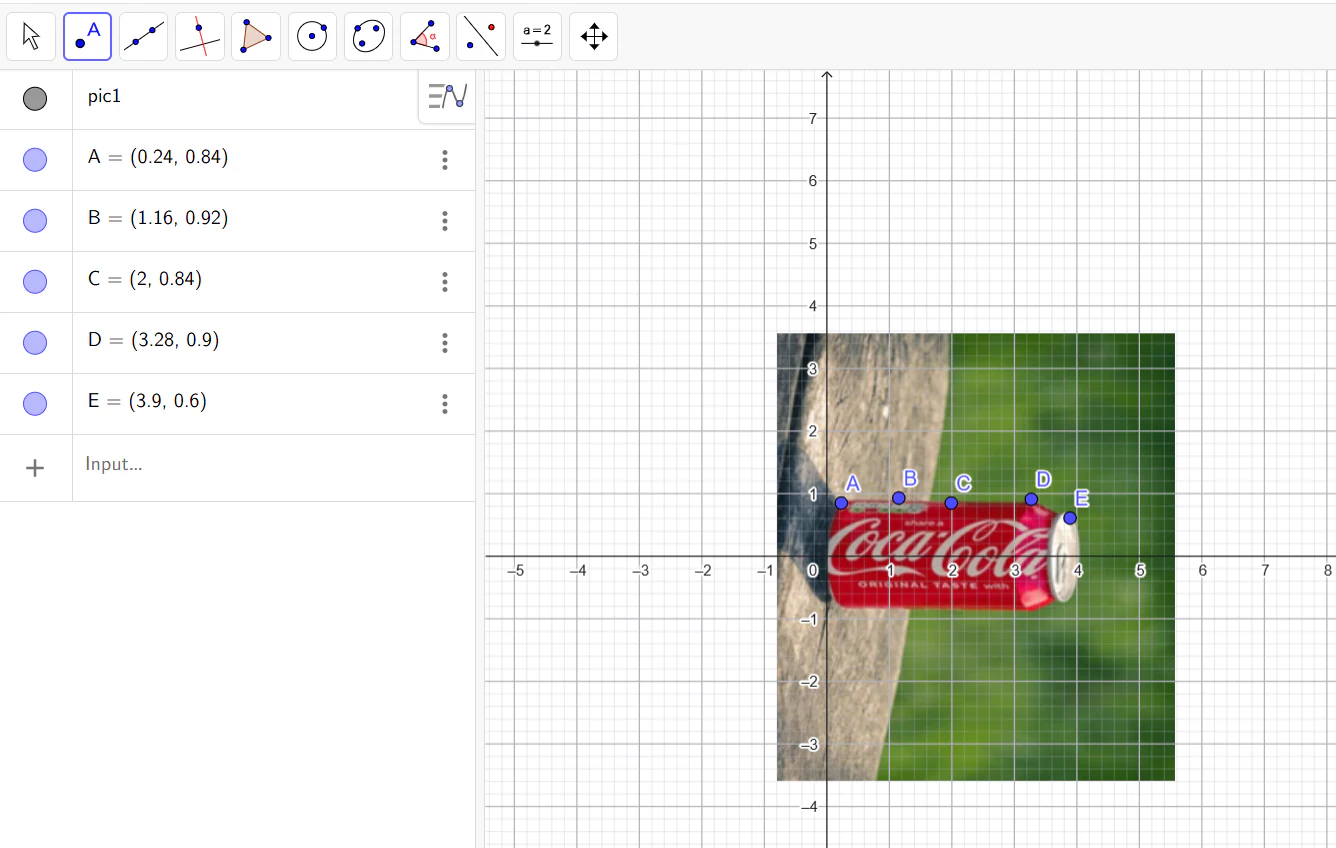
After uploading the Can, the first step was to obtain the coordinates of the Can. These coordinates assisted in generating the functions. The following is the image of the uploaded Can together with the generated coordinates:
Afterward, the best-fit functions were tried, and a polynomial of degree three was seen as the best-fit function. It was seen as the best-fit function since it could capture the Can's curve better than other tried functions. It could also capture more points on the given coordinates than other functions. The following are the images obtained together with the best-fit function:
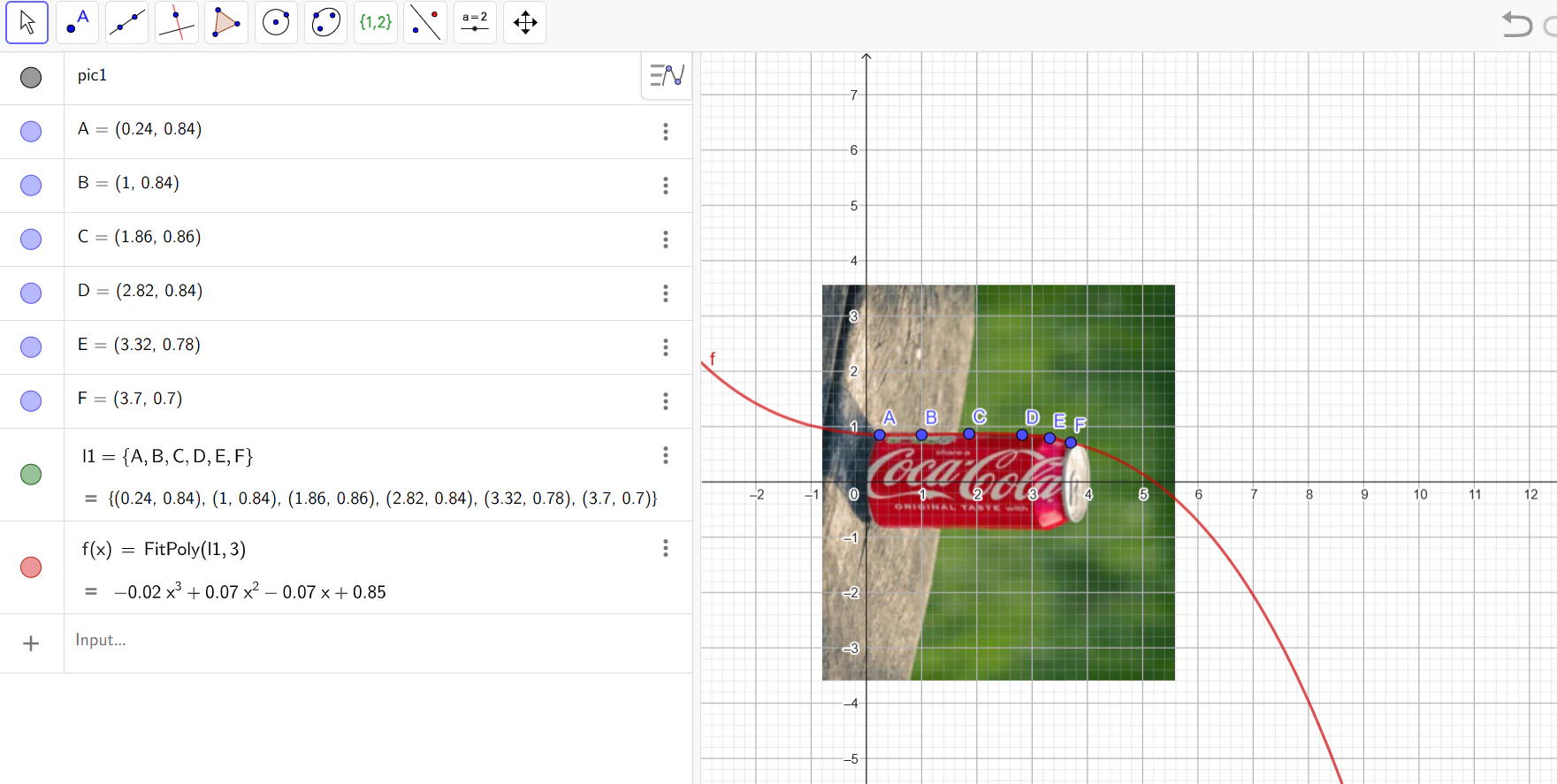
From the graph of the uploaded Can above, the following function can be obtained
The above equation will be used to obtain the Can modelled surface area. Afterward, piecewise functions were obtained using linear function only, and the results are as follows:
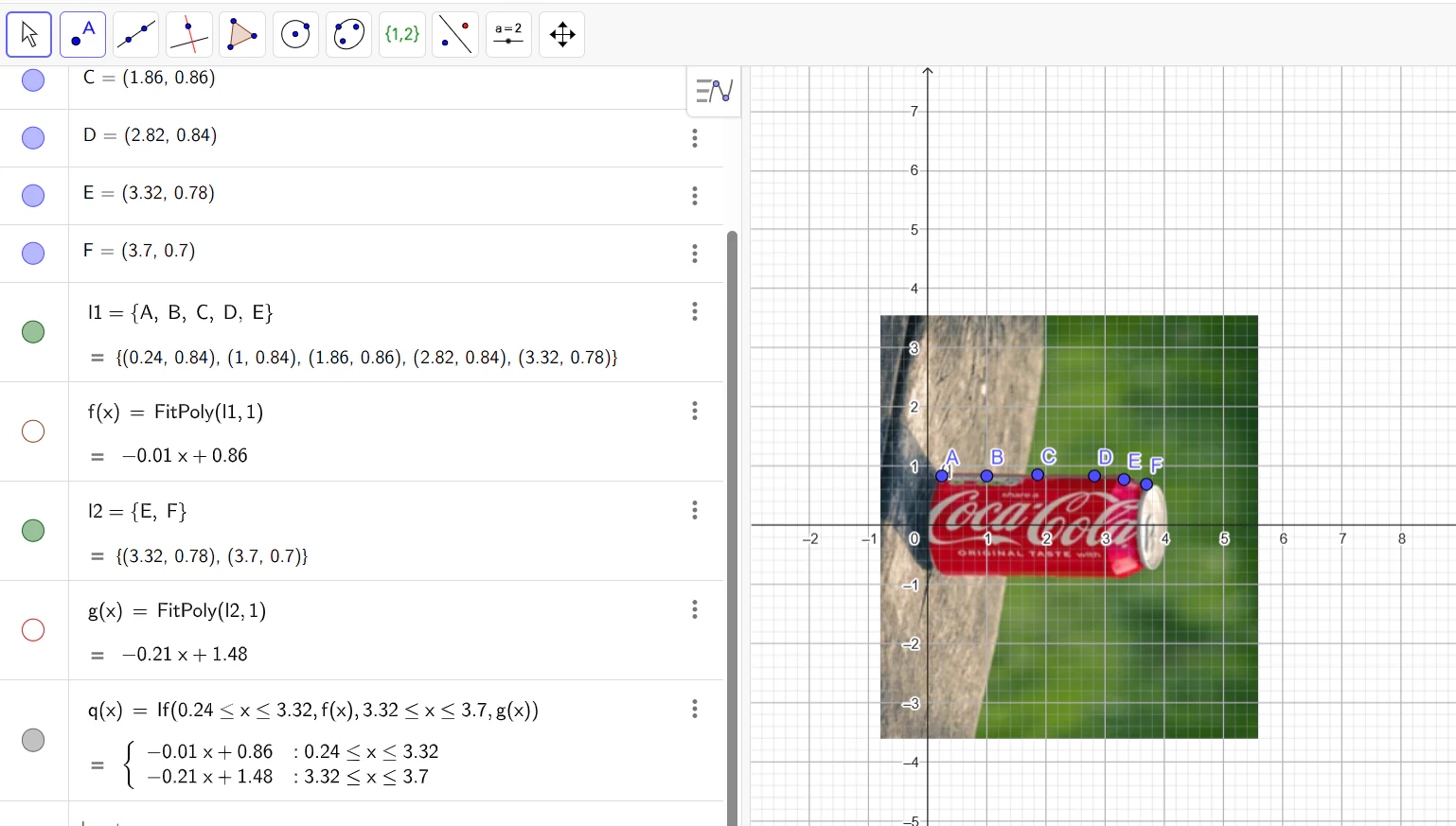
Thus,
Surface Area Determination
Determination of the actual height and scale factors
The actual height of the Can was determined using a ruler, and it was seen to be 14.50 cm. This determination of actual height is illustrated in the following image:
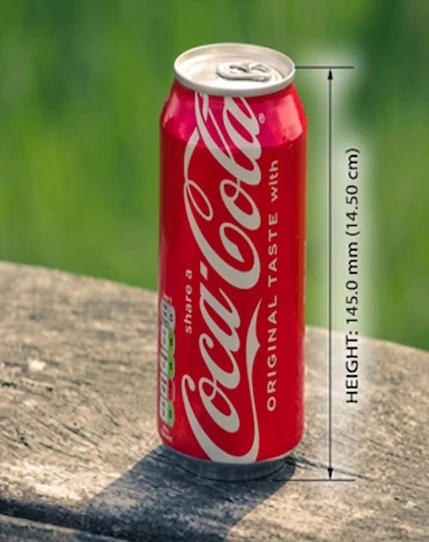
Before finding the surface area of the Can, it was important to find the area scale factors. These scale factors were calculated as follows:
Calculation of the Surface area of the Can
The integration value for the surface area of the Can for the polynomial was calculated as follows:
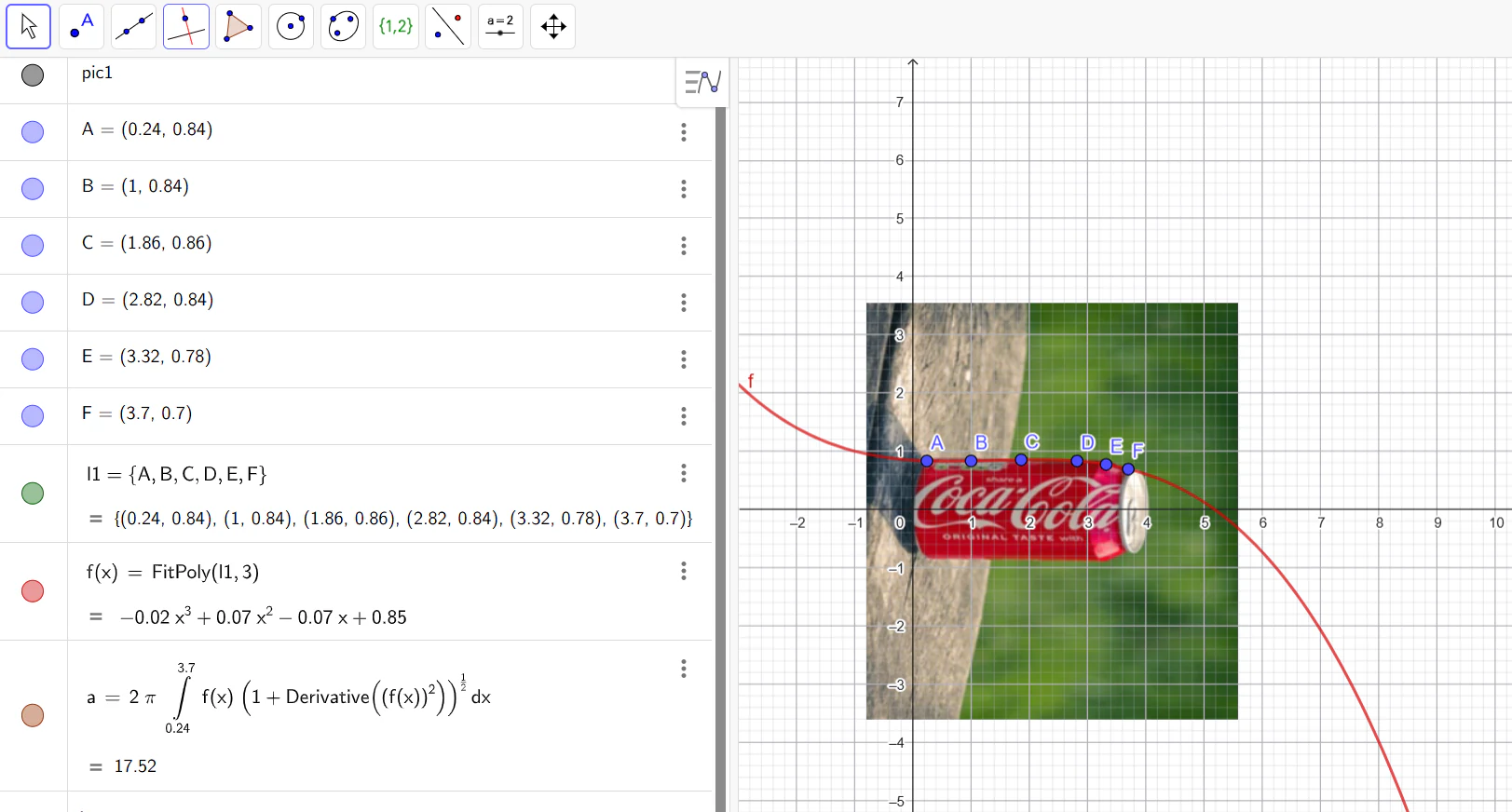
From the above image, it can be observed that the integration value is 17.52, and hence, the surface area was calculated as follows using the surface area scale factor:
For the piecewise function, the result was as follows:
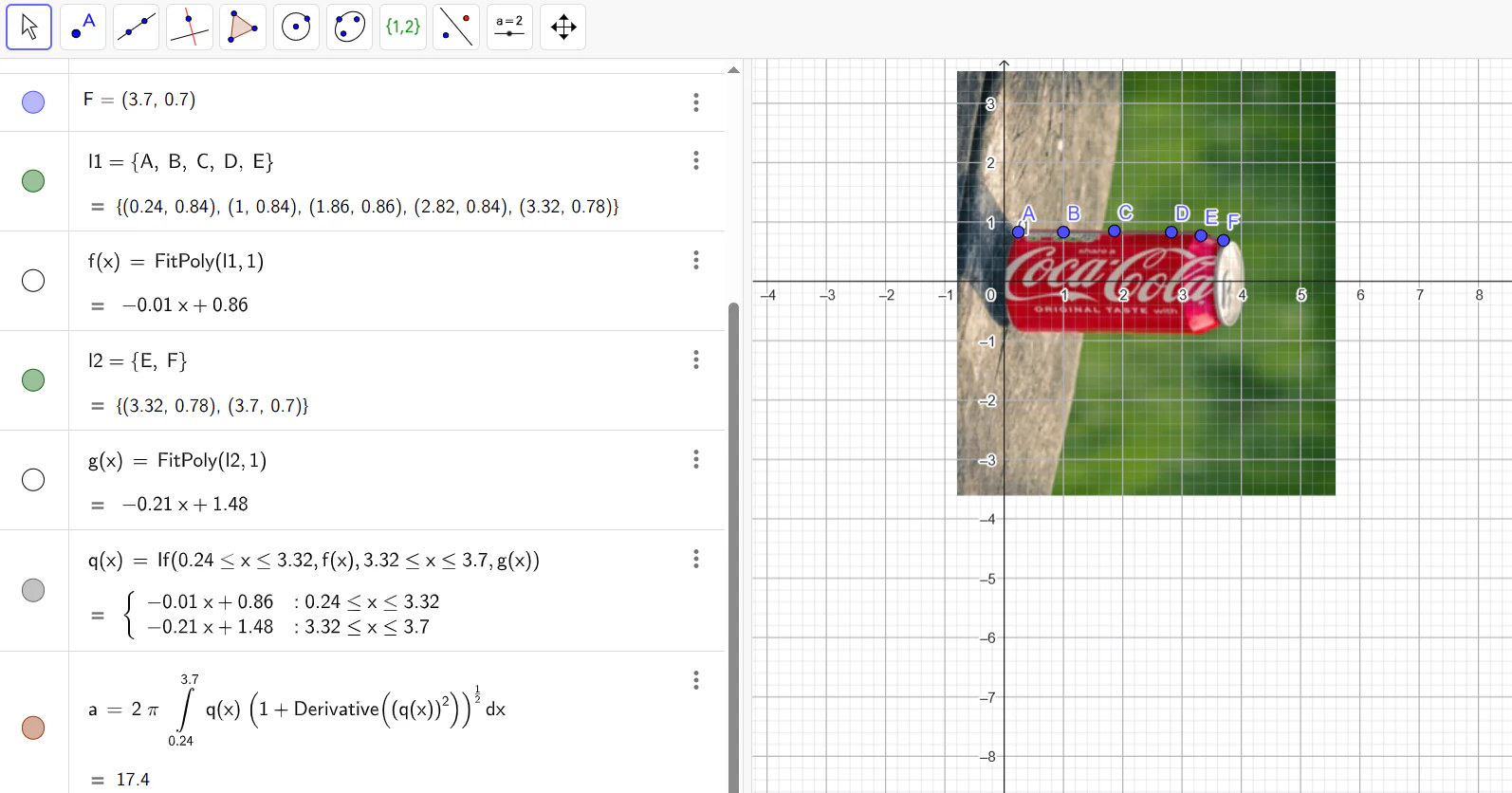
Thus, the actual surface area using area scale factor is;
Based on the calculated surface area for the polynomial and piecewise function, it can be estimated that the actual surface area of the Can is 307.65 cm² or 305.54 cm², but to obtain the exact value, I decided to calculate the average of the two:
The above surface area represents the actual surface area of the Soda Can. This surface can be optimized or minimized while maintaining the Can's volume fixed at 330 cm³. This minimization ensures fewer materials are used in designing the Soda Can (Stewart et al., 2021). This minimization of surface area while maintaining the volume at a fixed volume reduces the cost of production.
Designing and Minimization
To determine which container shape uses the least material, I compared three different three-dimensional shapes while keeping the volume fixed at 330 cm³ (330 mL). The shapes selected were:
- Right circular cylinder (actual soda can shape)
- Cubic
- Theoretical Minimum (Sphere)
The shape with the smallest surface area would require the least material and therefore represent the most economical design.
Shape 1: Optimizing a Cylinder
Below is a cylindrical representation of a cylindrical Can;
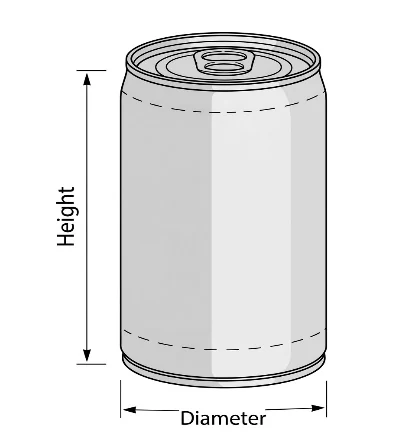
The volume of a cylinder is;
Since the volume must remain constant;
Thus;
The surface area of a closed cylinder is;
Substituting the volume equation yields;
To minimize the surface area,
Setting the derivative equal to zero;
The optimized Height is;
Thus, the minimum surface area is;
Shape 2: Optimizing a Cubic
The cubic representation is as shown below;
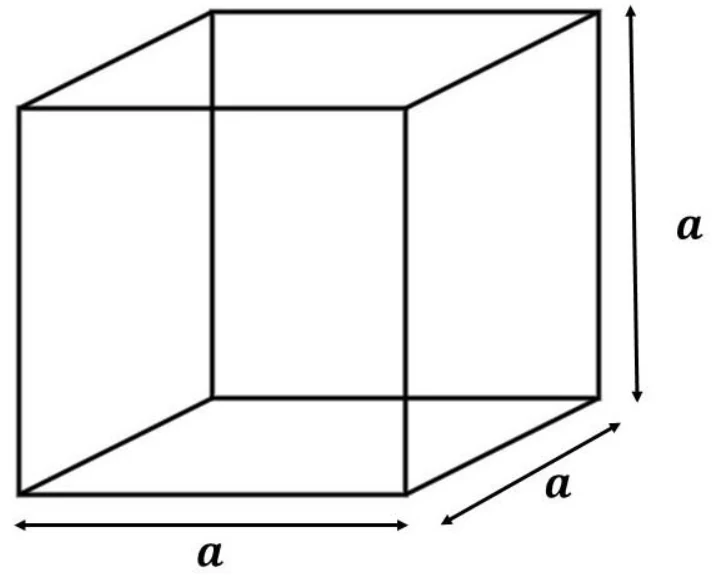
For a cube;
Where;
Using the fixed volume;
Thus, the surface area becomes;
Thus, although the cube has equal edges, it still requires more materials than the optimized cylinder;
Shape 3: Theoretical minimum (Sphere)
Below is a representation of the sphere;
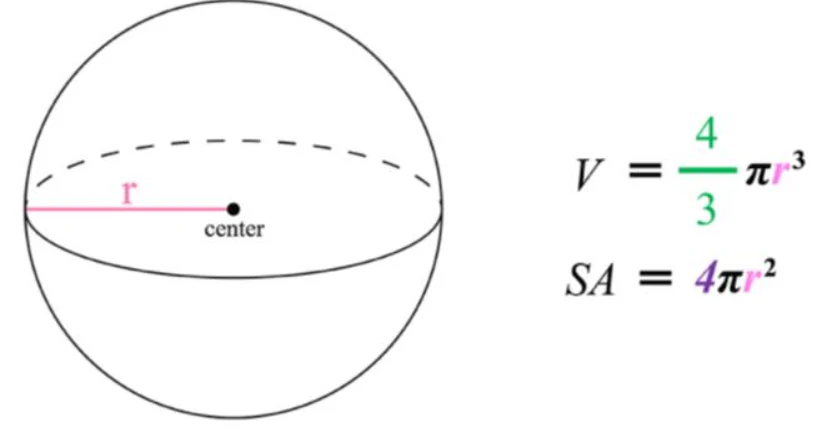
For a sphere;
Solve for the radius;
Surface area;
Therefore, the smallest possible surface area of any closed container holding a volume of 330 mL is a sphere (Larson & Edwards, 2023).
Conclusion and Evaluation
This study illustrated the use of optimization to determine the dimensions of a 330 mL soda can that minimize surface area for a given volume. The can was modelled and the equation for the surface area of a cylinder was differentiated to find the dimensions that gave the minimum surface area. A cylinder, a cube, and a sphere of equal volume were also investigated. The results indicated that the sphere has the minimum possible surface area and the optimized cylinder Can use less material than the cube. However, even if the theoretical optimum is a sphere, the optimized cylindrical design would be a practical choice for a soda Can while maintaining a volume of 330 mL and using less material.
A limitation of this investigation is that the soda can was modeled using measured coordinates and mathematical functions, and may not be representative of all the small features of the actual can. In addition, the surface area of revolution only gives the curved side of the can: the top and the bottom are not included, so the surface area found for the actual can is not directly comparable with that of the closed cylinder, which includes both ends. The investigation also assumes that a reduction in surface area will be a direct reduction in material use, rather than taking into account the strength, thickness, and manufacturing requirements of the can. The experience of this investigation allowed me to gain insight into applying calculus and optimization to a real-life problem by differentiating to obtain a minimum surface area given a fixed volume. Additionally, the comparisons of various shapes allowed me to get a sense of the difference between an inherent (mathematical) optimal design and an actual design.